Masonry Repair · Flue Liner Replacement · Crown & Flashing · Firebox Rebuild · Trusted Since 2010
No chimney system in Northeast Ohio ages gracefully without professional maintenance and timely repair. Canton’s winters deliver freeze-thaw cycles that assault brick and mortar from the inside out. Summer humidity saturates exposed masonry. Heavy precipitation pushes water through failed crowns, loose flashing, and porous brick faces. And year after year, the cumulative damage compounds, until what began as a hairline crack in a mortar joint becomes a structural failure requiring a full chimney rebuild.
The difference between catching chimney damage early and facing a major repair bill is almost always the same thing: annual inspection and prompt repair when problems are identified. Spalling bricks found at Stage 1 cost a fraction of a partial chimney rebuild after three seasons of unaddressed freeze-thaw deterioration. A cracked crown sealed in spring prevents the liner damage, moisture intrusion, and wood frame rot that an open crown produces through a full Ohio winter.
Oaktree Chimney Solutions provides complete chimney repair for homeowners throughout Canton, North Canton, Jackson Township, Massillon, Perry Township, Plain Township, and all of Stark County. Our CSIA-certified technicians assess every repair need honestly, explain every option clearly, and perform all work to NFPA 211 standards and Ohio building code requirements.

Complete Repair Services
From the firebox at the base to the cap at the top, here is what each repair involves and the typical cost range in Canton.
Removing deteriorated mortar from between brick courses and replacing it with fresh mortar matched to the original profile and color. The most common, most time-sensitive masonry repair. We grind out failed mortar to a minimum ¾ inch depth and match new mortar to the compressive strength of the brick, so the joint, not the brick face, takes future stress.
Spalling is when moisture in the brick face freezes, expands, and detaches the outer face. Caught early, we replace the affected bricks with matching units and repoint surrounding joints. Once it spreads across the face, partial rebuilding of the affected courses is needed. Left alone, spalling exposes the interior masonry to direct water intrusion and accelerates each season.
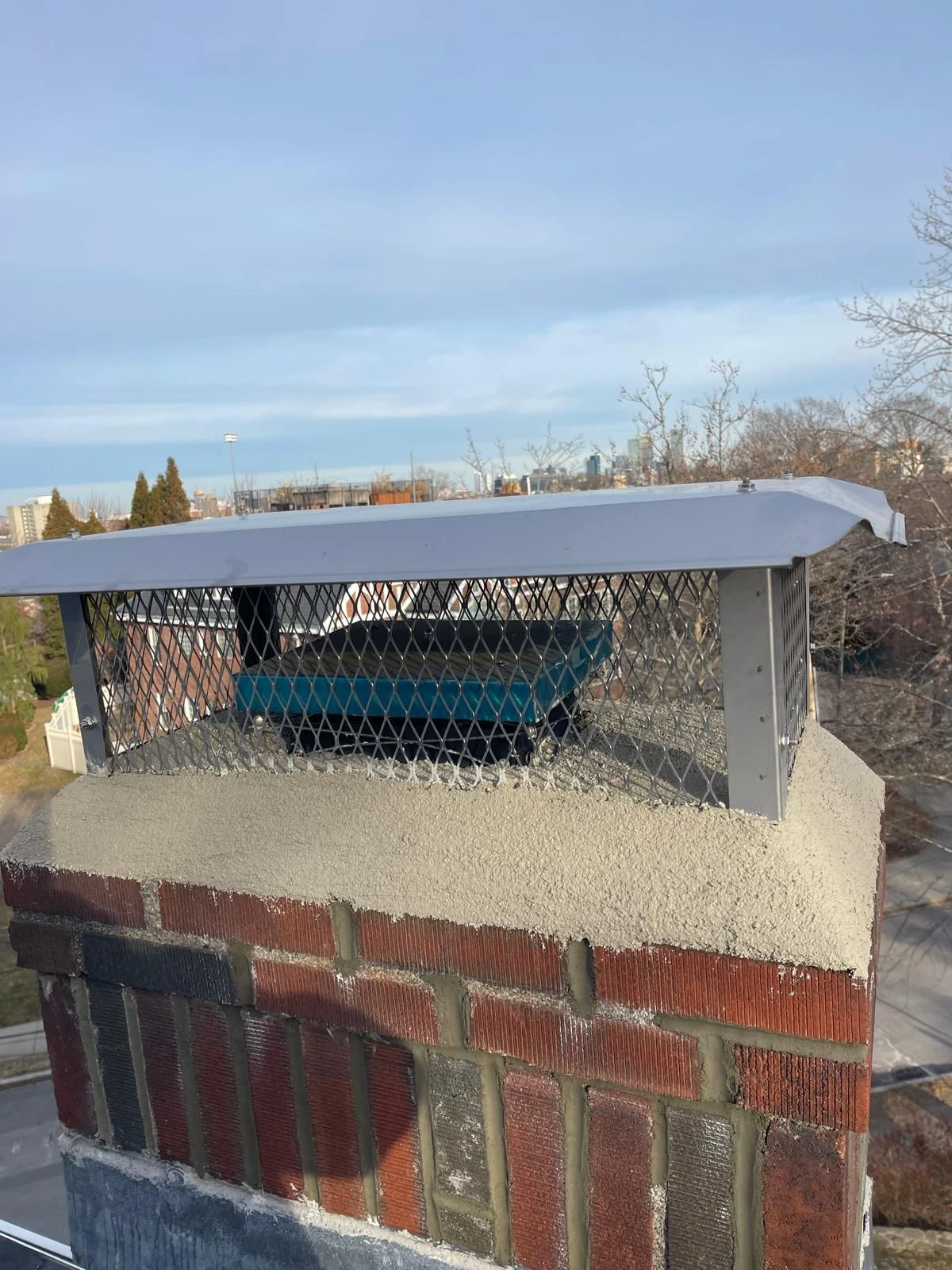
The crown seals the top of the chimney, sloping water away from the flue and top brick course. Crown cracking is nearly universal in older Ohio homes, especially crowns built with standard portland mortar instead of crown mix. Minor cracks get flexible elastomeric sealant; crowns cracked through, lost their overhang, or separated need full rebuilding. A proper rebuild should last 20+ years.
The metal seal, typically lead, aluminum, or galvanized steel, that bridges the chimney and roof at the penetration point. When it fails, whether through corrosion, separation, or crumbling mortar around the counter flashing, water runs straight into the roof structure, producing interior staining often misdiagnosed as a roof problem. We re-embed, reseal, or fully replace, sealed with weather-rated compatible sealant.
Years of thermal cycling crack firebrick and crumble refractory mortar, creating both a fire risk, since loose bricks let heat reach framing, and an efficiency loss. We replace deteriorated firebrick and repoint with heat-rated refractory mortar. Parging the smoke chamber smooth improves draft and resists creosote at the transition above the firebox.
When freeze-thaw has compromised multiple brick courses, the chimney has developed visible lean or settling, or a fire has caused widespread damage, individual repairs are no longer enough. Partial rebuilds address the deteriorated section above the roofline; full rebuilds reconstruct from the firebox up with new materials to current code, using freeze-resistant brick and purpose-built crown mix.
Testimonials
Don’t just take our word for it. Here’s what homeowners throughout the Akron area have to say about their experience with Oaktree.
The Ohio Factor
Ohio’s climate creates some of the most demanding conditions for chimney masonry in the country. Here is why, before you decide on repair timing.
Canton and Stark County see roughly 60 to 80 freeze-thaw cycles per year, where temperatures cross the 32°F threshold and absorbed moisture alternately freezes and thaws. Each freeze expands trapped water by about 9%, putting enormous internal pressure on the masonry. Over months and years this fractures brick faces, crumbles mortar joints, and opens crown cracks that let in more water, accelerating the next cycle. No masonry is immune.
Canton receives roughly 38 inches of annual precipitation plus significant snowfall, and Northeast Ohio summer humidity is consistently high. Porous brick and mortar absorb moisture continuously, and when that moisture meets winter temperatures, freeze-thaw damage begins. Without waterproofing and intact crown and flashing seals, Canton chimneys absorb more water than they can safely manage.
A significant share of Canton’s housing predates 1970. Many have original clay tile liners that have endured 50+ years of thermal cycling without relining, crowns cracked and patched repeatedly, and mortar joints at or past service life. Older homes in North Canton, Jackson Township, and historic Canton often need multiple simultaneous repairs rather than a single fix.
Every Oaktree repair begins with an honest, thorough assessment, not a sales pitch.
We start with a full inspection, including camera scanning of the flue interior, to document every repair need across the system. We photograph all damage and explain exactly what we found, what caused it, why it matters, and what options are available.
You receive a written estimate before any work begins, detailing the scope of each repair, the materials, and the total cost. For multiple items, we prioritize clearly: which repairs are safety-critical and urgent, which are structural maintenance, and which are preventive.
All work is performed to NFPA 211 standards and Ohio building code using materials rated for Northeast Ohio's climate. We do not use inappropriate mortar grades, undersized liner materials, or shortcuts that compromise durability.
Every repair is documented with before and after photos. This supports insurance claims, provides a record for future inspection comparisons, and confirms the work addresses the specific damage identified in the pre-repair assessment.
We assess every repair need honestly, show you the photographic evidence, explain your options without pressure, and build every repair to last through Northeast Ohio winters. Related services that often pair with repair include chimney inspection, chimney cleaning, chimney waterproofing, and chimney cap installation.
Warning Signs
Most damage becomes visible well before it reaches emergency status. Watch for these.
Brick faces flaking, popping out, or deteriorating is direct evidence of freeze-thaw damage, usually appearing on upper sections first where weather exposure is greatest. Even one or two spalling bricks warrant assessment; spalling accelerates as the exposed masonry beneath absorbs more water and the cycle continues.
Joints that have recessed, crumbled, or disappeared are an urgent repair indicator. Open joints allow direct water entry between the bricks, bypassing the brick face and accelerating freeze-thaw damage to the interior masonry far faster than surface deterioration alone.
Efflorescence, the white mineral deposit on chimney brick, is caused by water moving through the masonry and carrying dissolved minerals to the surface as it evaporates. Not structural damage itself, but a reliable indicator that water is penetrating in significant volume, and often the first visible sign that waterproofing, crown repair, or flashing work is needed.
Interior staining near the chimney, whether on ceilings, on walls in the attic or upper floors, or around the fireplace surround, indicates active moisture intrusion. The source is almost always failed flashing, a cracked or open crown, a missing cap, or porous masonry. Each requires a different repair, so a professional assessment determines which is responsible.
Crown cracks visible from the ground with binoculars, or found during inspection, allow direct water entry. Any crack through the full depth of the crown should be repaired before the next winter; a single Ohio winter with an open crown crack allows enough moisture intrusion to produce significant liner and masonry damage.
A chimney that leans, has separated from the house structure, or shows horizontal cracking across multiple courses has experienced structural settling or foundation movement and requires immediate assessment. Structural failure in a chimney, meaning collapse of upper sections, is a real consequence of advanced, unaddressed deterioration.
Camera findings of cracked clay tile, displaced tiles, collapsed sections, or widespread mortar failure in the liner are an immediate safety concern. A damaged liner should not be used until repaired or relined. Carbon monoxide intrusion through liner cracks is a documented risk in homes with compromised liners.
From tuckpointing and crown rebuilds to liner replacement and full chimney rebuilds, Oaktree serves Canton and all of Stark County with CSIA-certified, code-compliant repairs built for Northeast Ohio’s climate. Every estimate is in writing, every repair is documented with before and after photos, and no work happens without your authorization.
FAQs
Cleaning removes creosote, soot, and debris from the flue interior. Repair addresses physical damage: cracked masonry, deteriorated mortar, failed liner sections, damaged crown, failed flashing. A professional inspection identifies which is needed, and many chimneys need both. We never recommend repairs without showing you photographic evidence of the damage.
DIY tuckpointing requires specific tools, correct mortar selection, and proper joint preparation. Using mortar harder than the surrounding brick, a common DIY mistake, causes the brick faces to spall rather than the mortar joints, worsening the damage. For isolated minor deterioration on accessible sections, informed DIY is possible. For significant deterioration, spalling brick, or any chimney over two stories, professional tuckpointing is safer and more durable.
Chimney damage caused by a sudden, accidental event, such as a chimney fire, a falling tree, or storm damage, is typically covered under standard homeowner’s insurance. Damage from gradual deterioration, deferred maintenance, or normal wear and tear is generally not covered. We provide written estimates with photo documentation that can be submitted to your insurer for covered loss claims.
Minor repairs such as tuckpointing, crown sealing, flashing repair, and cap replacement are typically completed in a single visit of two to four hours. More extensive repairs such as liner replacement, firebox rebuild, or partial masonry rebuild may require one to two full days. We provide clear timeline estimates before scheduling.
They describe the same fundamental process: removing deteriorated mortar and replacing it with fresh mortar. Tuckpointing technically refers to a finish technique using two contrasting mortars to create fine, uniform-looking joints, but the terms are used interchangeably in most residential chimney contexts. Both involve grinding out old mortar to sufficient depth and applying new mortar in multiple passes.
A chimney with visible lean or structural movement requires immediate assessment. Even modest lean indicates the foundation, the lower courses, or the roof connection has been compromised. Leaning sections can progress to collapse, and the rate is unpredictable. Do not defer assessment of a leaning chimney.
Immediately, or more precisely, before using the fireplace again. A chimney fire can crack the liner, destroy mortar joints, and damage the outer masonry at temperatures that leave no visible evidence from the firebox. A Level 2 camera inspection identifies the full extent, and any structural repairs must be completed first. CSIA guidelines are explicit: do not use the chimney until it has been professionally evaluated and any damage repaired.
Yes. Oaktree Chimney Solutions provides chimney repair throughout Stark County including North Canton, Jackson Township, Massillon, Perry Township, Plain Township, Louisville, Alliance, Hartville, Uniontown, and surrounding communities. Call (330) 771-9394 to confirm availability for your address, or see all our Canton chimney services.
Service Areas
Primary Stark County Service Area