Most homeowners know creosote is bad. Fewer know that not all creosote is the same, and that the difference between a Stage 1 deposit and a Stage 3 deposit is the difference between a routine annual cleaning and a chimney that should not be used again until it receives emergency professional treatment.
Stage 3 creosote is the most dangerous condition a chimney can develop. It is dense, extremely flammable, chemically resistant, and structurally damaging to flue liners. It cannot be removed with a standard chimney brush. It requires specialized chemical treatment before any mechanical cleaning can even begin. And in severe cases, the liner itself needs to be replaced entirely because the removal process causes further cracking in already-compromised clay tile.
If you have not had your chimney inspected in several years, used your fireplace heavily through Ohio’s long heating seasons, or regularly burned wood that wasn’t fully seasoned, there is a realistic chance you have Stage 2 or Stage 3 deposits in your flue that you cannot see from the firebox opening.
Here is everything you need to understand about Stage 3 creosote: what it is, how it forms, what the warning signs are, why it is genuinely dangerous, and what professional removal involves.
If you suspect Stage 3 creosote, stop using the chimney
Do not light another fire. Glazed creosote is extremely flammable and only gets worse with use. Call a CSIA-certified professional to treat, clean, and camera-inspect the flue first.
Key Takeaways
- Creosote develops in three stages; Stage 3 (glazed) is the most dangerous and resistant form.
- It is glossy black, looks lacquered even when dry, and often hides in the middle and upper flue.
- It usually takes multiple missed cleanings, wet wood, and slow fires over several years to form.
- A standard brush cannot remove it; professional chemical treatment (PCR or ACS) must come first.
- It creates fire risk, carbon monoxide risk, and liner damage at the same time. Stop using the chimney.
A Quick Recap: The 3 Stages of Creosote Buildup
Before focusing on Stage 3, it helps to understand where it sits in the progression. Creosote does not appear in its most dangerous form overnight. It develops in stages, and each stage represents a worsening of the same underlying problem: incomplete combustion, insufficient flue temperature, and high-moisture fuel.
Light Soot
Low riskLoose, dusty, flaky carbon that clings lightly to flue walls. The only form removable with a standard brush during routine annual cleaning.
Tar Flakes
Elevated riskHard, shiny, brittle flakes or a crunchy tar-like coating that adheres firmly. Needs rotary systems and chemical loosening agents.
Glazed Creosote
EmergencyDense, shiny, baked-on glaze, sometimes dripping like black icicles. Standard equipment cannot touch it. Ignites at normal fire temperatures.
Stage 1: Light Soot
Stage 1 creosote is a loose, dusty, flaky deposit of unburned carbon particles that clings lightly to flue walls. It forms when fires burn hot and complete with good airflow and dry fuel. Stage 1 is the least hazardous form and the only form removable with a standard chimney brush during routine annual cleaning. A chimney consistently maintained at Stage 1 is a chimney being properly cared for.
Stage 2: Tar Flakes and Crunchy Deposits
Stage 2 forms when combustion is more frequently incomplete, from wetter wood, lower fire temperatures, or restricted airflow. It appears as hard, shiny, brittle black flakes or a crunchy, tar-like coating that adheres firmly to the flue liner. A standard brush cannot remove Stage 2 deposits effectively. Rotary cleaning systems and chemical loosening agents are required. The fire risk is significantly elevated at Stage 2. Without intervention, it progresses to Stage 3.
Stage 3: Glazed Creosote
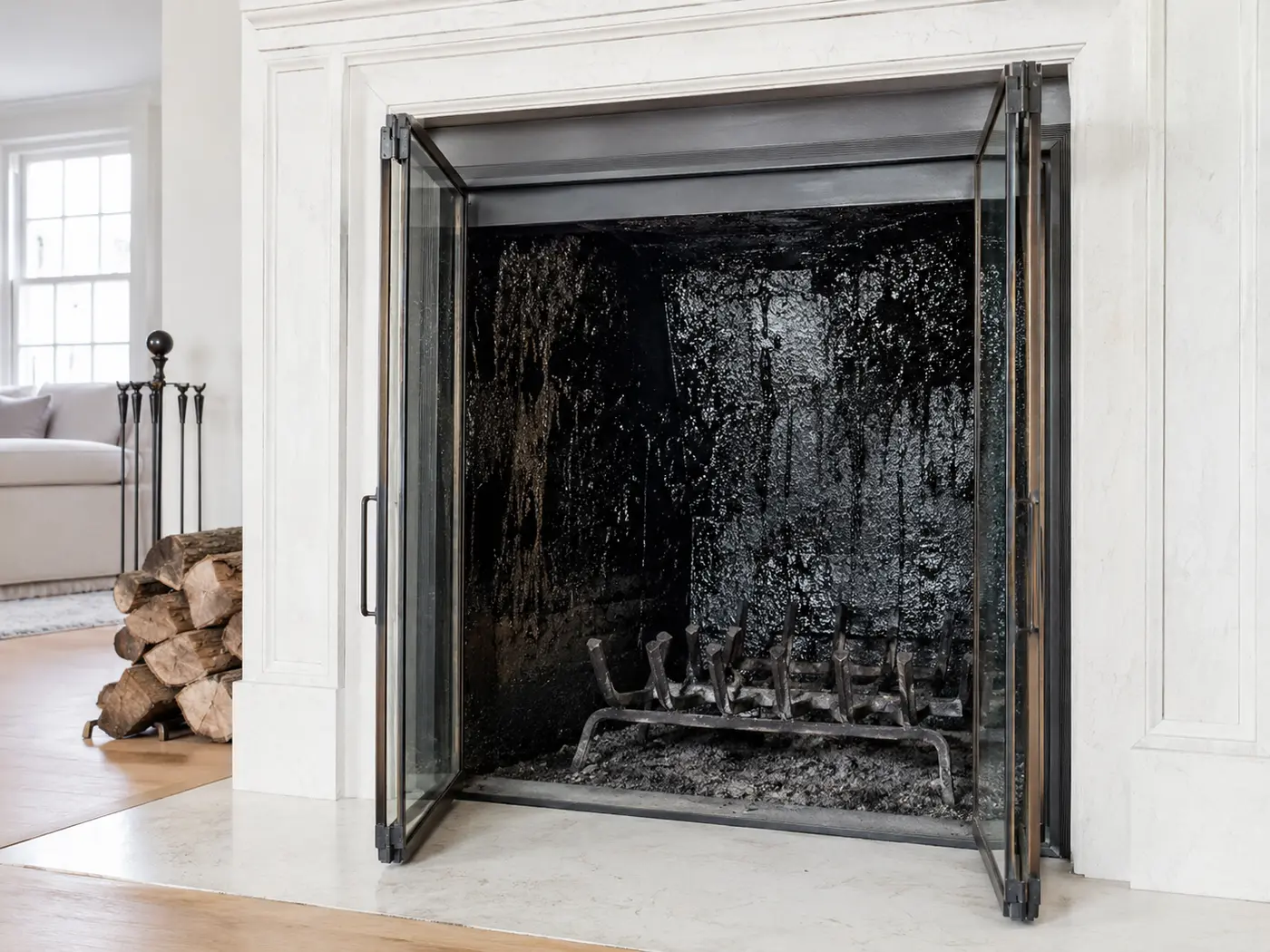
Stage 3 is what happens when Stage 2 deposits are repeatedly exposed to heat without being removed. The tar hardens and bakes into a dense, shiny, tar-like glaze, sometimes dripping down the flue walls and reforming into hard formations that look like black icicles. This is glazed creosote, and it is an emergency. Standard equipment cannot touch it. It has the highest fuel energy content of any creosote form. And it ignites at temperatures your fireplace reaches during a normal wood fire.
What Does Stage 3 Creosote Look Like?
Stage 3 creosote has a distinctive appearance that distinguishes it from earlier stages. It is intensely black or very dark brown with a high-gloss, glass-like sheen, hence the term glazed creosote. Unlike the dusty or flaky appearance of Stage 1 and the brittle crunchiness of Stage 2, glazed creosote looks almost wet or lacquered even when completely dry.
In advanced cases, it forms thick, uneven layers that can reduce the effective flue opening by a third or more. Drip formations, where molten creosote ran down the flue walls during a previous hot fire and hardened in place, are common in severely affected chimneys. These formations can partially or fully block sections of the flue, creating carbon monoxide and fire risk simultaneously.
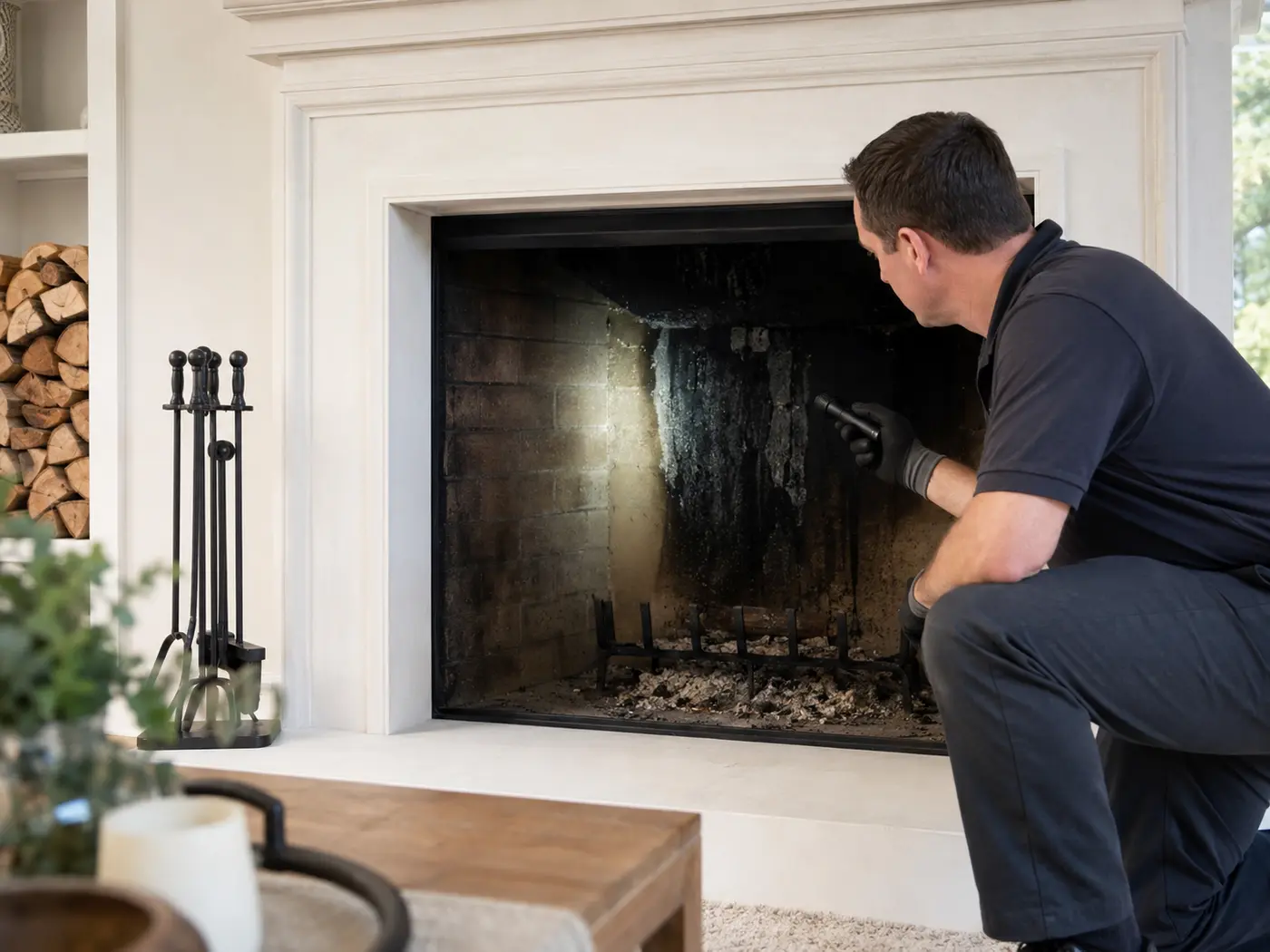
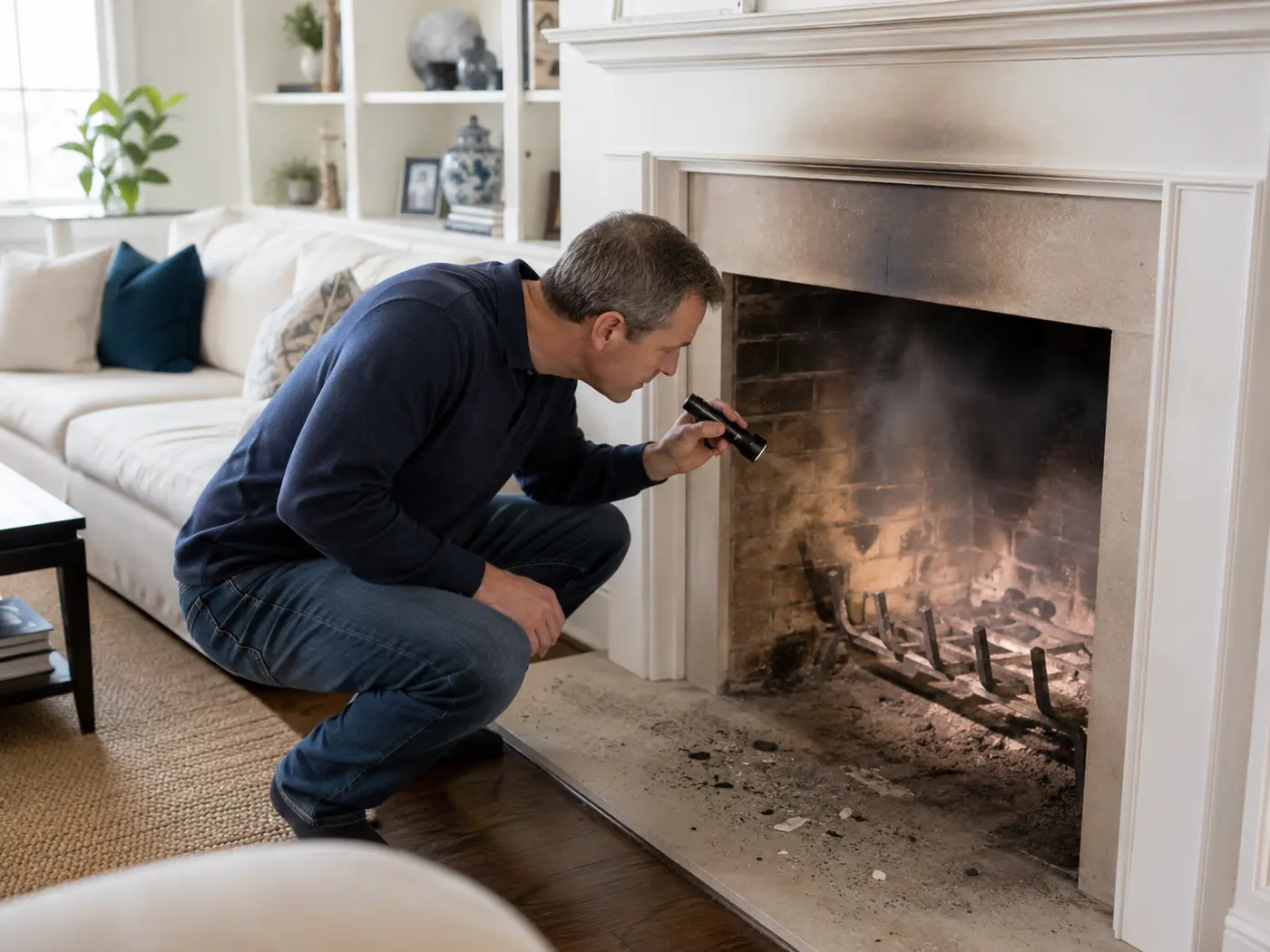
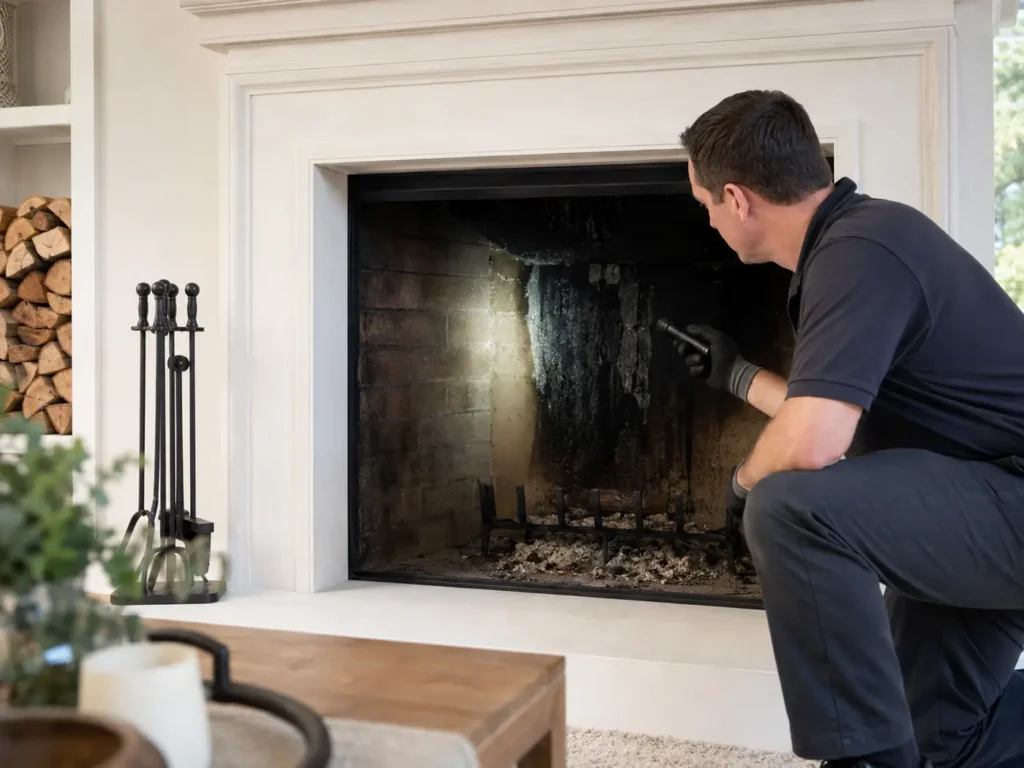
A homeowner peering into the firebox with a flashlight will typically see the lower sections of the flue most clearly. But Stage 3 deposits often concentrate in the middle and upper sections of the flue, precisely where the smoke gases cool most rapidly and where condensation is heaviest. These sections are only visible with a professional chimney inspection using a camera.
What Causes Stage 3 Creosote to Develop?
Stage 3 does not happen in a single heating season under normal conditions. It develops over multiple years of compounding factors, each one accelerating the others.
Skipped Annual Cleanings
The most direct cause. Stage 1 deposits left uncleaned through a second and third heating season progressively harden into Stage 2 and Stage 3 as heat and time convert the softer deposits into denser, more resistant forms. A single missed cleaning rarely produces Stage 3. Multiple consecutive seasons without professional maintenance almost always does in a heavily used fireplace.
Chronic Wet or Unseasoned Firewood
Burning firewood with a moisture content above 25 to 30% produces significantly more smoke, lower combustion temperatures, and dramatically higher creosote output than properly seasoned hardwood. In Ohio, where firewood is often purchased split and used within the same season, homeowners frequently burn wood that has not had sufficient drying time. Wood needs a minimum of six months, ideally twelve, of open-air drying to reach the sub-20% moisture content that produces a clean, hot burn.
Slow, Smoldering Fires
Long, low-temperature smoldering fires, built to extend burn time overnight or to bank heat, produce the combustion conditions most favorable to rapid creosote accumulation. The fire generates large volumes of cool, particle-heavy smoke that lingers in the flue and deposits creosote at a much higher rate than a hot, short-duration fire. Ironically, homeowners trying to get the most heat efficiency from their fireplaces by burning slow are often the ones developing the fastest creosote accumulation.
Cold Flue Walls from Ohio Winters
In Northeast Ohio, prolonged sub-freezing temperatures chill chimney masonry deeply overnight. A cold flue wall causes smoke gases to condense and deposit creosote more rapidly during the early minutes of every fire, before the chimney has had time to warm up. Over a long heating season with daily fires and persistently cold outdoor temperatures, this effect compounds significantly.
Why Stage 3 Creosote Is a Genuine Emergency
The word “emergency” is not an overstatement. Stage 3 deposits in an active chimney create three simultaneous and serious hazards.
Extreme fire risk
Glazed creosote holds enormous fuel energy and burns far hotter than wood, with chimney fires exceeding 2,000°F.
Carbon monoxide
Flue restriction disrupts draft, letting CO spill indoors silently while the fire still appears to burn normally.
Liner damage
Aggressive removal stresses already-vulnerable clay tile, which is why liner replacement is often needed.
Extreme Chimney Fire Risk
Stage 3 glazed creosote retains a high concentration of unburned hydrocarbons, the same fuel energy that was never released during the incomplete combustion that created it. When it ignites, it burns with an intensity that far exceeds a normal wood fire. Chimney fires fueled by Stage 3 deposits reach temperatures exceeding 2,000°F. At that temperature, clay tile liners shatter. Mortar joints disintegrate. The heat transfers through the chimney structure into adjacent wooden framing, where it can ignite a house fire that begins inside the walls with no visible warning from the interior.
Flue Restriction and Carbon Monoxide Intrusion
Heavy Stage 3 deposits narrow the flue opening and disrupt the chimney’s draft, the upward airflow that carries carbon monoxide and other combustion gases out of the home. A flue partially blocked by glazed creosote formations may still allow a fire to burn and produce visible smoke, while simultaneously allowing dangerous concentrations of CO to spill back into the living space. This is particularly dangerous because it does not produce the dramatic smoke intrusion that alerts homeowners to draft problems; the CO enters silently while the fire appears to perform normally. You can read more about chimney-related CO risk from the CDC.
Liner Damage During Removal
This hazard is less obvious but important to understand. The mechanical process required to break up and remove Stage 3 deposits places significant stress on the flue liner. Clay tile liners, already vulnerable to cracking from thermal cycling and freeze-thaw damage in Ohio’s climate, frequently sustain additional cracking during aggressive Stage 3 removal. This is why most certified chimney professionals recommend a post-removal camera inspection to assess liner integrity, and why Stage 3 cases frequently require flue liner replacement alongside the creosote treatment.
Warning Signs of Stage 3 Creosote You Can Detect Without an Inspection
While Stage 3 deposits in the middle and upper flue are invisible without a camera, there are homeowner-detectable warning signs that indicate serious creosote accumulation:
- Noticeably reduced draft: fires are harder to start, draw more slowly, or produce more smoke than they used to, which indicates flue restriction from buildup.
- A strong, acrid, tar-like or asphalt-like smell from the fireplace when it is not in use, a reliable indicator of heavy creosote. It intensifies in warm, humid weather as heat activates the volatile compounds in the tar.
- Black drips or glossy deposits visible in the lower firebox or smoke shelf, which suggest Stage 3 material has melted and run down from higher in the flue.
- Shiny black lacquer-like coating on the lower firebox walls or damper, meaning material from above has flowed down during a previous fire.
- Any prior chimney fire, even a suspected minor one marked by a loud roaring from the fireplace, which makes Stage 3 assessment mandatory before the chimney is used again.
Suspect heavy buildup in your flue?
Our CSIA-certified technicians camera-scan the full flue to identify the stage of any deposits and explain your options honestly. Find out exactly what you are dealing with.
How Stage 3 Creosote Is Professionally Removed
This is where Stage 3 diverges completely from routine chimney cleaning. Standard rotary brushes and mechanical tools are ineffective against glazed creosote. Professional removal requires a two-stage process.
Chemical Treatment: PCR and ACS
The first stage is chemical. Two primary products are used in professional Stage 3 treatment: Poultice Creosote Remover (PCR) and Anti-Creo-Soot (ACS).
PCR is a dry chemical mixed with water to form a thick slurry that is applied directly to the glazed deposits, typically using an applicator inserted into the flue. The slurry adheres to the creosote surface, dissolving and absorbing the glaze over a 24 to 48 hour treatment period. As the PCR dries, it loses adhesion with the flue wall and falls away, taking the dissolved creosote with it. The dwell time is critical; rushing the process by cleaning too soon reduces its effectiveness significantly.
ACS (Anti-Creo-Soot) is an alternative chemical approach used in spray form. It can be applied directly to the fire or to the firewood before burning, with vapors rising through the flue and attaching to deposited creosote. ACS chemically modifies the glaze, converting it into a more brittle, brushable consistency that can be removed in subsequent mechanical cleaning.
Mechanical Cleaning After Chemical Treatment
Once the chemical treatment has had sufficient dwell time and the deposits have been converted from Stage 3 to a more removable form, mechanical cleaning using heavy-duty rotary systems removes the loosened material. The process is significantly more involved and time-consuming than standard Stage 1 cleaning, often requiring multiple passes and a follow-up camera inspection to confirm the flue is clear.
Stage 3 removal typically costs between $500 and $5,000 depending on flue length, deposit severity, and whether liner replacement is ultimately required. That range underscores the point: allowing Stage 1 deposits to progress to Stage 3 through missed annual cleanings is dramatically more expensive than consistent annual chimney cleaning.
What Happens If Stage 3 Creosote Is Left Untreated?
The trajectory of an untreated Stage 3 chimney is predictable. The deposits continue to harden, accumulate, and restrict the flue. Draft problems worsen. Carbon monoxide risk increases. And eventually, during any fire that generates sufficient heat to ignite the deposits, a chimney fire occurs.
A chimney fire in a Stage 3 chimney is not a minor event. The fuel load is enormous. The temperatures reached will crack clay liners, destroy mortar joints, and potentially ignite adjacent wood framing. Even if the fire does not spread to the structure, a post-fire camera inspection will almost universally reveal a chimney that requires extensive and expensive repair before it can be safely used again.
The only rational decision when Stage 3 is identified is immediate treatment. Do not use the chimney. Call a CSIA-certified professional. Get the flue treated, cleaned, and camera-inspected before lighting another fire. National standards for chimney safety are set out in NFPA 211, and more on creosote is available from the CSIA.
One inspection is all it takes to know exactly what you are dealing with. With Stage 3 creosote, that knowledge is the difference between a treatment and a house fire.
Frequently Asked Questions
What does Stage 3 creosote look like?
Stage 3 glazed creosote is intensely black or very dark brown with a high-gloss, glass-like sheen, looking almost wet or lacquered even when dry. In advanced cases it forms thick uneven layers and drip formations like black icicles that can reduce the flue opening by a third or more. It usually concentrates in the middle and upper flue, where it is only visible with a camera inspection.
Can I remove Stage 3 creosote myself?
No. Standard chimney brushes and mechanical tools cannot remove glazed creosote. It requires professional chemical treatment, such as Poultice Creosote Remover (PCR) or Anti-Creo-Soot (ACS), to convert the glaze into a brushable form, followed by heavy-duty rotary cleaning. This is a job for a CSIA-certified professional.
How much does Stage 3 creosote removal cost?
Stage 3 removal typically costs between $500 and $5,000 depending on flue length, deposit severity, and whether flue liner replacement is ultimately required. That range underscores why consistent annual maintenance is far less expensive than letting deposits progress to Stage 3.
Is it safe to use a chimney with Stage 3 creosote?
No. A chimney with Stage 3 creosote should not be used until it is professionally treated. The deposits create extreme chimney fire risk, can restrict the flue and allow carbon monoxide into the home, and only worsen over time. Stop using the fireplace and have the flue treated, cleaned, and camera-inspected first.