
Water stains near your chimney? We trace the leak to its source — flashing, crown, cap or masonry — and repair the flashing properly.
Proudly serving Akron & Northeast Ohio
Most chimney leaks start at the roofline.
The right fix depends on the failure.
Address every entry point found.
Know what you are seeing
The joint where your chimney meets the roof is the most common source of chimney leaks. When flashing fails — corroded metal, separated seams, dried sealant — rain runs straight into the structure.
But flashing is not the only suspect. A cracked crown, a missing cap or deteriorated mortar can leak too. The right repair starts with finding the actual entry point, not guessing.
Brown rings near the chimney often point to water entering at the roofline.
Moisture reaching metal components suggests water is travelling down the flue.
Direct water entry usually means the cap, crown or flashing has failed.
Persistent moisture inside the system needs a source found and fixed, not just dried out.
Active leak into your living space? Contain the water, protect furnishings, and arrange an assessment. Stop using the fireplace if water is reaching the firebox or damper.
Work matched to the finding
From a dried bead of sealant to a full flashing replacement, the scope should reflect what the diagnosis finds — not a tube of caulk applied to every leak.
Trace the water entry point with a roofline inspection and, where needed, controlled water testing.
Correct isolated failures — reseat separated sections, renew counter-flashing and replace failed sealant.
Install new step and counter-flashing where the existing metal is corroded or beyond repair.
Cut proper reglets and set counter-flashing into the mortar joints so water sheds over the base flashing.
Remove failed caulk and tar, then apply compatible sealant where sealant is the correct detail.
Assess crowns, caps and masonry when the flashing alone does not explain the water.
Repair or replace?
The condition of the flashing metal, its attachment and the surrounding roof help determine the appropriate scope.
| Repair may be appropriate | Replacement may be needed |
|---|---|
| Metal is sound with an isolated separation or failed sealant | Flashing is corroded, torn or pulling away in multiple areas |
| Counter-flashing is intact and can be reused | Counter-flashing is missing or was never installed |
| One defined entry point is found | Water enters at several points around the chimney |
| Roofing around the chimney is in good condition | Surrounding roofing is failing and needs coordination |
These are assessment considerations, not a diagnosis from photos alone.
Materials matter
Flashing works as a system: step flashing woven with the shingles, counter-flashing set into the masonry, and sealant only where sealant belongs. Tar smeared over the joint is a patch, not a repair.
The metal must suit the roof and the chimney, and each layer must lap over the one below so water always sheds outward.
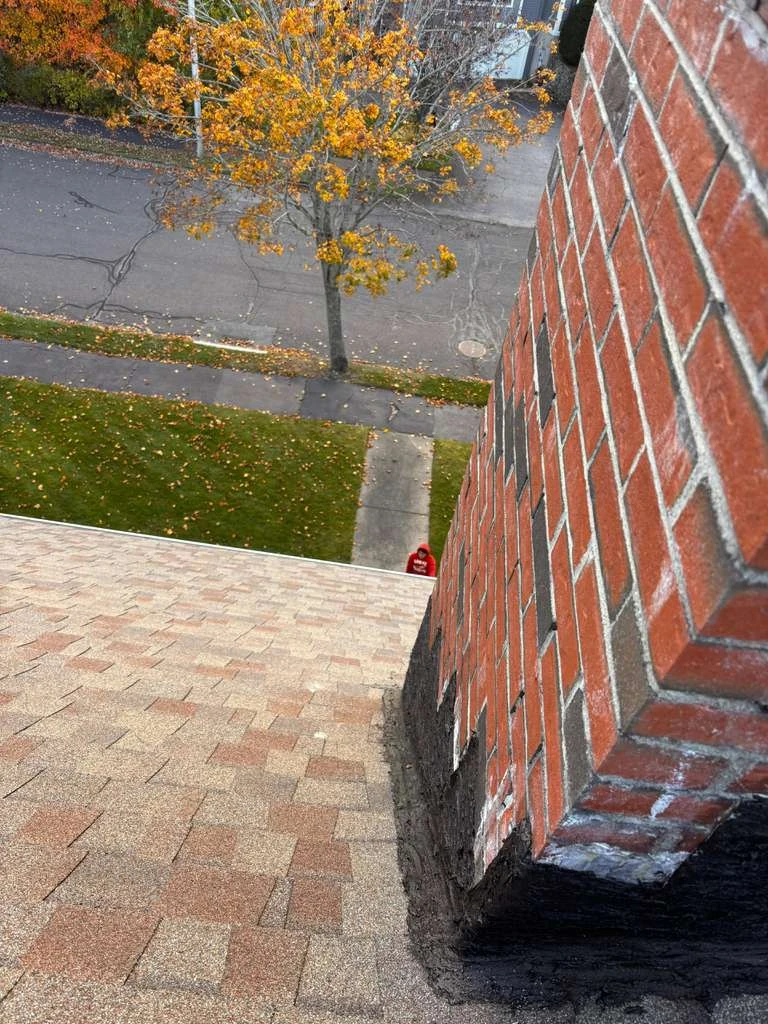
Flashing is the most common chimney leak source, but not the only one. A cracked crown, a missing or wrong-sized cap, or deteriorated mortar can leak just as badly. New flashing cannot fix a cracked crown — and a new crown cannot fix failed flashing.
Waterproofing is not a leak diagnosis. A coating cannot fix failed flashing, a cracked crown or a missing cap. Find the entry point first.
An explained scope, step by step
Inspect the roofline, flashing, crown, cap and nearby masonry. Controlled water testing where needed.
Show you where the water enters and which repairs address it — flashing, crown, cap or masonry.
Remove failed materials, install or renew flashing and counter-flashing, and seal correctly.
Check laps, attachment and sealant, and confirm related leak sources are addressed.
Discuss what to watch for and when the next inspection makes sense.
A stain on the ceiling does not always reveal the full scope. The estimate should identify the entry point and separate flashing work from other chimney services.
Roof access, the extent of metal failure and whether related crown or cap work is needed all influence the price.
Northeast Ohio conditions
Chimney masonry experiences rain, snow, wetting and drying, and changing temperatures. Moisture that enters vulnerable brickwork and freezes can contribute to deterioration.
Sound flashing, suitable crown and cap details, and intact mortar joints all have a role. Periodic chimney inspections help identify changes before extensive damage develops.
Before you book
Stains that appear near the chimney after rain, rust on the damper, or water in the firebox usually point to the chimney system — most often the flashing. A roofer and a chimney specialist look at different failure points, so the diagnosis matters.
Sometimes — when the metal is sound and only the sealant has failed. But sealant over corroded or separated flashing is a short patch. The assessment determines whether resealing is honest or replacement is needed.
Most flashing repairs are completed in a single visit once the diagnosis is done. Full replacement or work combined with crown or masonry repairs can extend the schedule — your estimate will say which.
Flashing is chosen to suit your roofing material and the chimney. It sits at the roofline, largely out of sight — function and correct lapping matter more than appearance.
Suitability depends on temperature, roof conditions and the materials used. Sealants and safety requirements vary with weather — scheduling should reflect the requirements of the repair.
Stop use if water is reaching the firebox, damper or surrounding structure until the source is found. Moisture and venting do not mix — arrange an assessment first.
Testimonials
Don’t just take our word for it. Here’s what homeowners throughout the Akron area have to say about their experience with Oaktree.
Noticed missing mortar, flaking bricks or a crack? Arrange a masonry assessment with Oak Tree Chimney Solutions.
Akron focused. Northeast Ohio served. Explore local service information for Cuyahoga Falls, Stow, Hudson. Contact us with your address and a description of the damage to discuss availability.


