CSIA-Certified Inspections · Camera Flue Scan · Written Report with Photos · Starting at $49
Your chimney works silently in the background every time you use your fireplace or heating system, carrying combustion gases, smoke, and heat safely out of your home. When something goes wrong inside the flue, you rarely see it, smell it, or feel it until the damage is already severe.
Creosote accumulates with every fire. Clay tile liners crack from Ohio’s freeze-thaw cycling. Chimney crowns deteriorate. Flashing separates at the roofline. Animals nest inside uncapped flues over the off-season. None of these problems produce a visible symptom in your living room. They sit hidden inside the chimney structure, progressing quietly, until they produce a chimney fire, a carbon monoxide incident, or a moisture intrusion event that damages ceilings, walls, and framing.
A professional chimney inspection is the only way to know what is actually happening inside your chimney system. Oaktree Chimney Solutions provides CSIA-certified inspections for homeowners throughout Canton, North Canton, Jackson Township, Massillon, Perry Township, Plain Township, and all of Stark County, complete with a full camera scan of the flue interior and a detailed written report with photos documenting every finding.
What's Included
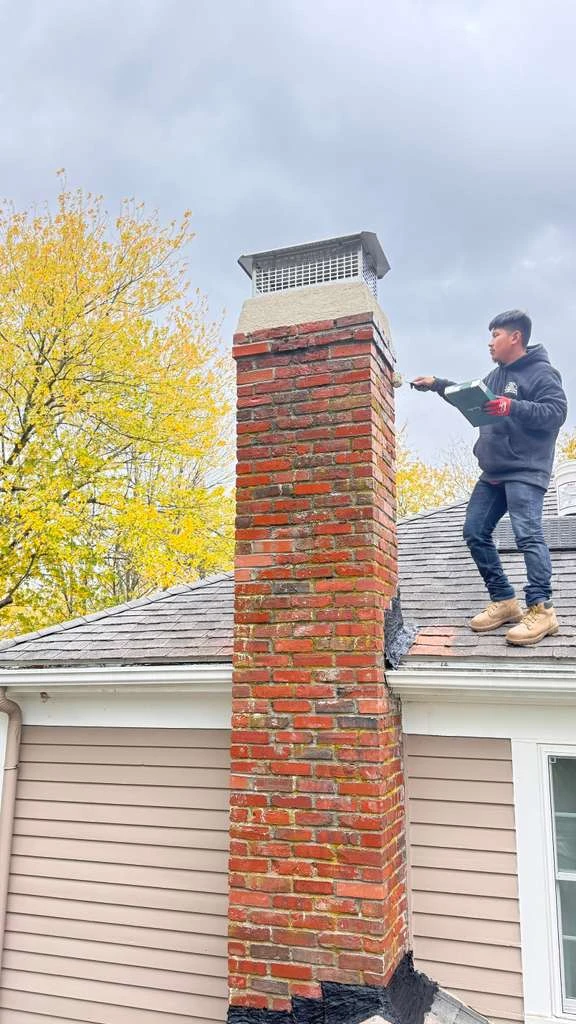
Every Oaktree inspection is performed by a CSIA-certified technician following NFPA 211 inspection standards, the national safety standard that governs chimney inspection requirements across the United States.

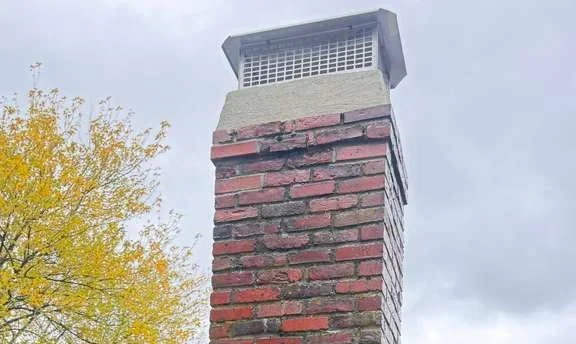
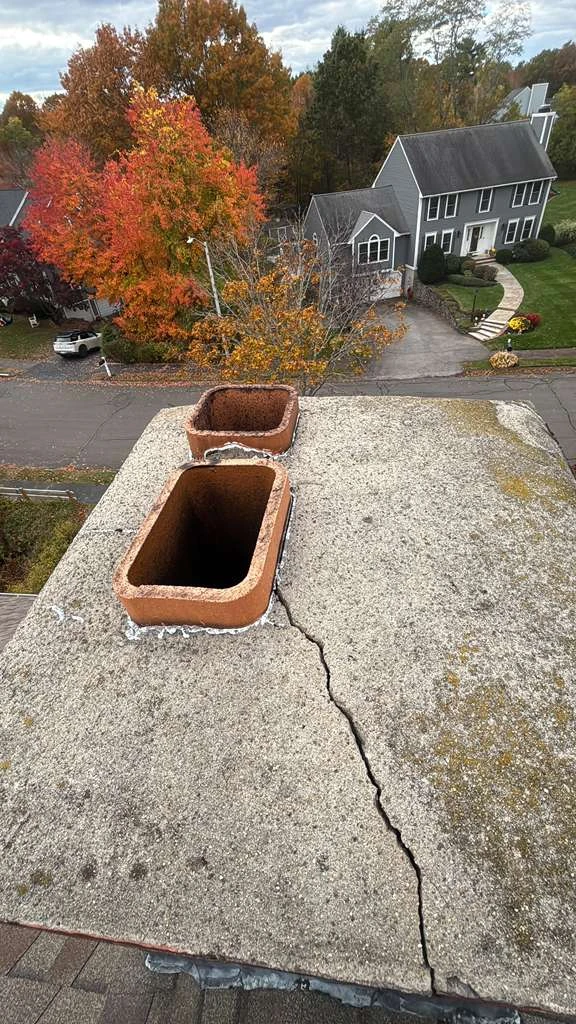
We start at the top. The cap is inspected for rust, corrosion, mesh, and impact damage. The crown, the slab that seals the top of the chimney, is examined for cracking, deterioration, and improper slope. Crown deterioration from freeze-thaw cycling is one of the most common, and most commonly missed, sources of moisture intrusion in Northeast Ohio.
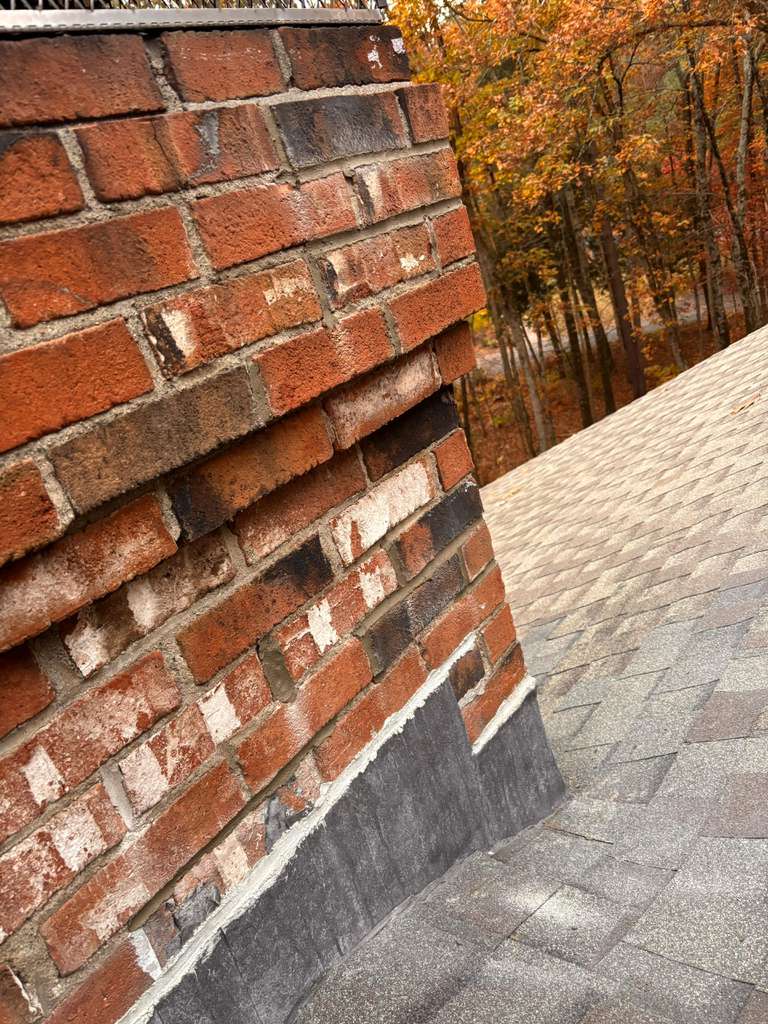
We assess the full visible exterior, checking brick and mortar joints for spalling, efflorescence, cracking, and structural movement. Spalling bricks, where the face has detached under freeze-thaw pressure, and crumbling mortar joints are early indicators of deterioration that becomes expensive if left unaddressed. We document the location and extent of any damage.

The flashing seals the joint between the chimney and the roof. When it fails, whether through corrosion, separation, or improper installation, water enters directly at the chimney penetration point. Flashing failure is a leading cause of interior staining near chimneys and is often misdiagnosed as a roof problem. We inspect it from roof level.
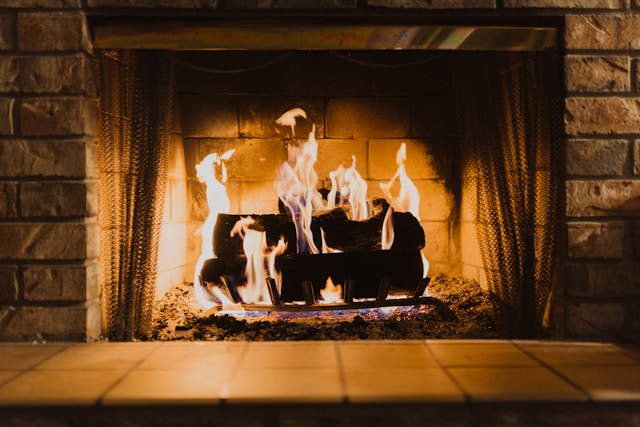
Inside the fireplace we inspect the firebox walls and floor for cracking, spalling firebrick, and deteriorated refractory mortar. The smoke shelf, the ledge directly behind and above the damper, accumulates debris, creosote, and moisture and is a common source of odors and blockage. We assess its condition and identify buildup requiring removal.

The damper controls airflow and seals the flue when the fireplace is idle. We test it for smooth operation, check for corrosion, warping, or heat discoloration that indicates prior thermal stress, and verify that it seals adequately to prevent conditioned air loss and animal entry when closed.

The smoke chamber is the funnel-shaped space above the firebox that compresses rising gases into the flue. Poorly parged or deteriorated walls reduce draft efficiency and can allow heat transfer into framing. We inspect for cracking, spalling, and creosote accumulation that indicates draft problems.
The component that separates a true NFPA 211 inspection from a basic visual check. We scan the full liner from firebox to cap, capturing video and stills. The camera reveals what no flashlight can: cracks in the middle and upper flue, displaced tiles, mortar failure, Stage 2 and Stage 3 creosote, and obstructions. After a prior fire, even a suspected slow fire, it is the only way to confirm whether the liner is compromised.

Every inspection ends with a complete written report: photographs of all conditions, the technician’s assessment of each, and clear recommendations. This documentation supports insurance claims, is required for Level 2 inspections in real estate transactions, and gives you a documented baseline the next inspection can measure against.
Testimonials
Don’t just take our word for it. Here’s what homeowners throughout the Akron area have to say about their experience with Oaktree.
NFPA 211 Levels
NFPA 211 defines three inspection levels based on your circumstances and the chimney’s history. Our technicians recommend the right level for your situation.
Level 1
The minimum required under NFPA 211 and the right inspection for a regularly maintained chimney with no recent changes to the appliance, fuel, or system. Covers all readily accessible interior and exterior components: firebox, damper, smoke chamber, visible liner, crown, cap, and exterior masonry. Typically 45 to 60 minutes with a written report.
Level 2
Required by NFPA 211 on the sale or purchase of a home, after any known or suspected chimney fire, after a change in fuel or appliance, after a flue or liner modification, and after seismic or severe weather events. Includes everything in Level 1 plus a full camera scan and examination of accessible areas in attics, crawl spaces, and basements, producing the video and photo record attorneys, lenders, and adjusters require.
Level 3
Performed when Level 1 or Level 2 findings indicate a concealed hazard in an area that cannot be accessed without removing chimney components, masonry, or building materials. The most comprehensive and invasive level, reserved for situations where significant hidden damage is suspected. Uncommon in a well-maintained chimney.
Not all inspections deliver the same standard of documentation, expertise, or honesty. Here is what sets Oaktree apart.
The CSIA credential is the highest professional standard in the industry, requiring demonstrated knowledge of NFPA 211 standards, chimney anatomy, and combustion safety. Every Oaktree inspection is performed or directly supervised by a CSIA-certified technician, not an uncertified employee with a checklist.
Since 2010 we've inspected and maintained chimney systems across Canton and Stark County, from century-old brick homes to newer construction in Jackson Township and North Canton. We know how this climate affects chimneys in homes of every age and type.
You receive a written report with photographs after every inspection. Not a verbal summary. A documented record of every finding and recommendation, in a format you can hand to an insurance company, real estate attorney, or repair contractor.
Many companies charge extra for camera scanning, or skip it on "basic" inspections. At Oaktree it is a standard component of every inspection. It is the only way to accurately assess liner condition, and omitting it produces an incomplete and potentially misleading picture of the chimney's safety.
We report what we find. If your chimney is in excellent condition, we tell you. If it needs repair, we explain what, why, and your options, without pressure or exaggeration. Our business grows through trust and referrals, not inflated repair recommendations.
Warning Signs
Most chimney problems develop quietly, but some circumstances make an inspection urgent. If any of these apply, schedule before lighting another fire.
NFPA 211 requires annual inspection for every chimney regardless of use frequency. Ohio’s climate, with its freeze-thaw cycles, heavy precipitation, and high humidity summers, affects masonry, liners, and flashing continuously, whether the fireplace is in use or not. One heating season without inspection is the window in which small problems become expensive ones.
NFPA 211 mandates a Level 2 inspection upon any property transfer. If the seller cannot produce documented inspection records, a Level 2 before closing is not optional; it is the only way to know the actual condition of the chimney you’re inheriting. Buyers who skip this regularly discover cracked liners, Stage 3 creosote, and failed flashing after closing, at their own expense.
A persistent smoky or tar-like smell, particularly when the fireplace is not in use, indicates creosote accumulation or a draft problem allowing flue odors to migrate into the living space. This is one of the most reliable homeowner-detectable warning signs of a chimney system that needs attention.
Smoke entering the room during a fire indicates a draft failure, caused by a blocked flue, a negative pressure condition in the home, a cold flue wall, or a structural venting problem. Each requires diagnosis before the cause can be corrected. Do not assume the fireplace is just being difficult; draft failure is a symptom, not a normal condition.
Water staining near the chimney indicates active moisture intrusion, typically from failed flashing, a cracked chimney crown, missing cap, or deteriorated masonry. Left unaddressed, moisture damage spreads to wall framing, insulation, and drywall. An inspection identifies the entry point so waterproofing and repair can stop the damage at the source.
Efflorescence, the white mineral deposits that appear on brick chimney exteriors, is a visible indicator of water moving through the masonry from inside. It means moisture is already penetrating the structure and carrying dissolved minerals out as it evaporates. It is not structural damage by itself, but it is a reliable signal that waterproofing and masonry assessment are needed.
Any chimney fire, whether you heard it roaring or simply suspect something was off, requires a Level 2 inspection before the fireplace is used again. Chimney fires damage clay tile liners in ways that are completely invisible from the firebox opening and produce CO intrusion risk on every subsequent fire until the damage is repaired.
A chimney without a functional cap has been exposed to rain, snow, animals, and debris entering the flue at every precipitation event and throughout every off-season since the cap was removed or damaged. One Ohio winter is enough for an uncapped flue to accumulate blockage material or moisture damage that requires professional remediation before safe use.
Every chimney tells a story. From complete masonry rebuilds on historic Canton homes to modern gas fireplace installations in Jackson Township, Oaktree Chimney Solutions has helped hundreds of Stark County homeowners protect their properties and improve their living spaces. Here are a few examples of the chimney and fireplace work we’ve completed throughout the Canton area.
Your chimney works hard through Ohio’s long heating season. A one-hour annual inspection is the investment that keeps every fire you light safe, and keeps the carbon monoxide, chimney fires, and moisture damage that undetected chimney problems produce out of your home. Call us or schedule online, and we’ll confirm your appointment and arrive ready to give your chimney the thorough, honest assessment it deserves.
FAQs
NFPA 211, Section 14.2.1, requires at minimum one inspection per year for every chimney, fireplace, and venting system, regardless of how often the fireplace is used. For Canton homeowners using their fireplace from October through March, the best time to schedule is September, before the heating season begins.
An inspection assesses the condition and safety of the chimney system and documents findings. A chimney cleaning removes creosote deposits, soot, and debris from the flue. They are complementary services: an inspection tells you what condition the flue is in, and a cleaning removes the material that creates fire and CO risk. NFPA 211 requires both annually for regularly used chimneys.
Yes. Gas fireplaces still produce combustion byproducts and require proper venting to operate safely. Annual inspection checks for blockages, liner condition, flashing integrity, draft performance, and cap condition, all of which affect the safety of a gas venting system in the same way they affect a wood-burning one.
The camera scan covers the full interior length of the flue liner, including sections 6, 10, and 15 feet up the chimney that are completely invisible from the firebox opening. It reveals liner cracks, displaced tiles, mortar joint failure, Stage 2 and Stage 3 creosote deposits, and any obstructions in the upper flue. For post-fire assessment and pre-purchase inspections, the camera scan is non-negotiable.
Yes, and specifically a Level 2 inspection. NFPA 211 requires a Level 2 inspection upon any property transfer. It includes the camera flue scan and produces the documented report that real estate attorneys, mortgage lenders, and title companies may require. Ask for the inspection before closing, not after. Chimney repairs discovered post-closing are the buyer’s expense.
A Level 1 inspection typically takes 45 to 60 minutes. A Level 2 inspection with camera equipment and roof and attic access typically takes 60 to 90 minutes. We arrive prepared with all equipment and complete the inspection in a single visit.
We explain every finding clearly, show you the photographs, and describe what the issue is, why it matters, and what the appropriate repair or service involves, including chimney repair or chimney waterproofing where needed. We provide a separate written estimate for any recommended work. You decide what to proceed with and when, with no pressure and no automatic add-on charges.
Yes. Oaktree Chimney Solutions serves homeowners throughout Stark County including North Canton, Jackson Township, Massillon, Perry Township, Plain Township, Louisville, Alliance, Hartville, and surrounding communities. Call (330) 771-9394 to confirm service availability in your specific area. See all our Canton chimney services.
Service Areas
Primary Stark County Service Area