Every year, nearly 25,000 chimney fires occur in American homes. The vast majority of them share a single root cause: creosote. According to the U.S. Fire Administration, over 77% of residential heating fires that start in chimneys are directly linked to creosote buildup, a flammable byproduct that accumulates silently inside your flue with every fire you light.
Most homeowners have no idea how much creosote has built up in their chimney, or how dangerous it has become. A chimney that looks and performs fine can be holding Stage 2 or Stage 3 deposits that are a single hot spark away from igniting. By the time a chimney fire makes itself known, it is already burning at temperatures that can crack masonry, collapse flue liners, and spread to surrounding wooden framing.
This guide explains exactly what creosote is, how it forms, why it becomes dangerous, and, most importantly, what you can do to prevent it.
Key Takeaways
- Creosote is a flammable, tar-like byproduct of burning wood that builds up inside the flue.
- It forms from three conditions: incomplete combustion, a cold flue, and high-moisture firewood.
- The three stages run from light soot (Stage 1) to glazed, glassy deposits (Stage 3), each more dangerous.
- Creosote can ignite at temperatures as low as 451°F, well within the range of a normal fire.
- Annual professional cleaning is the single most effective way to prevent a chimney fire.
What Is Creosote?
Creosote is a dark, tar-like substance that forms as a byproduct of burning wood. It begins as vapor, the unburned gases, oils, and carbon particles suspended in smoke, and as that smoke rises through the cooler upper sections of the chimney flue, it condenses and adheres to the liner walls. Over repeated fires, those condensed layers harden into a progressively more dangerous deposit.
Chemically, creosote is primarily composed of polycyclic aromatic hydrocarbons (PAHs), tar compounds, soot, and moisture byproducts. The exact makeup varies depending on the type of wood burned, how hot the fire burns, and how much airflow the firebox receives. What remains constant is this: creosote is highly flammable, it compounds over time, and it does not disappear on its own.
Why Creosote Is a Compounding Problem
This is the detail most homeowners miss. Creosote does not just sit inert inside your flue. As deposits accumulate, they narrow the flue opening and disrupt the chimney’s natural draft, the upward airflow that carries combustion gases out of the home. A weaker draft means slower-moving, cooler smoke that lingers longer in the flue. That slower, cooler smoke deposits even more creosote. The problem accelerates itself with every fire until intervention breaks the cycle.
How Does Creosote Form in Your Chimney?
Creosote forms when three conditions are present: incomplete combustion, a cold flue, and high-moisture fuel. Understanding each one helps you see where prevention is possible.
Incomplete Combustion and Poor Draft
A wood fire needs abundant oxygen to burn completely. When airflow to the firebox is restricted, by a partially closed damper, a blocked air inlet, or a poorly designed flue, the fire burns cool and produces thick, particle-heavy smoke. Those unburned particles rise into the chimney and condense as creosote before they can fully exit the flue. A weak draft compounds this: without strong upward airflow, smoke moves slowly, stays in contact with flue walls longer, and deposits more material with every pass.
Low Flue Temperature
Creosote condenses most aggressively when the flue temperature drops below 250°F. This happens most commonly at the start of a fire before the chimney has warmed up, during long smoldering fires that produce more smoke than heat, and in chimneys with poor insulation that lose heat rapidly on cold nights. In Northeast Ohio, where outdoor temperatures can stay well below freezing from November through March, cold flue walls are a persistent challenge for homeowners who run their fireplaces heavily throughout the heating season.
Burning Wet or Unseasoned Firewood
Freshly cut firewood retains 50% or more of its original moisture content. Burning high-moisture wood produces dramatically more smoke, lower combustion temperatures, and significantly more creosote than properly seasoned hardwood. The CSIA and leading fire safety organizations recommend burning only wood with a moisture content below 20%, typically achieved after at least six months of open-air drying. A moisture meter, available for under $20, takes the guesswork out of knowing when your firewood is ready to burn safely.
The 3 Stages of Creosote Buildup, and Why Stage 3 Is a Crisis
Not all creosote is equal. The Chimney Safety Institute of America classifies creosote deposits into three stages, each progressively more dangerous and more difficult to remove.
Light Soot
Low riskLoose, dusty, flaky soot from hot, complete fires with seasoned wood. Removed easily with a standard brush during routine annual cleaning.
Tar-Like Deposits
Moderate riskHard, shiny, brittle flakes or a crunchy tar-like coating from damp wood or low-temperature fires. Requires professional rotary tools to remove.
Glazed Creosote
High riskThick, glassy, tar-like glaze that is dense and extremely flammable. Must be chemically treated before removal. Do not use the chimney until treated.
Stage 1: Light Soot (Low Risk, Easily Removed)
Stage 1 creosote appears as loose, dusty, flaky soot deposits on the flue walls. It results from complete, hot-burning fires with well-seasoned hardwood and good draft conditions. Stage 1 is the least dangerous form and can be removed with a standard chimney brush during a routine annual cleaning. A chimney that stays at Stage 1 year after year is being maintained correctly.
Stage 2: Tar-Like Deposits (Moderate Risk, Requires Rotary Tools)
Stage 2 creosote forms when incomplete combustion is more frequent, typically from burning damp wood, running fires at low temperatures, or using a fireplace with restricted airflow. It appears as hard, shiny, brittle flakes or a crunchy, tar-like coating on the flue walls. A standard brush cannot remove Stage 2 deposits effectively. Professional rotary cleaning systems and chemical loosening agents are required. Left unaddressed, Stage 2 buildup progresses quickly to Stage 3.
Stage 3: Glazed Creosote (High Risk, Chemical Treatment Required)
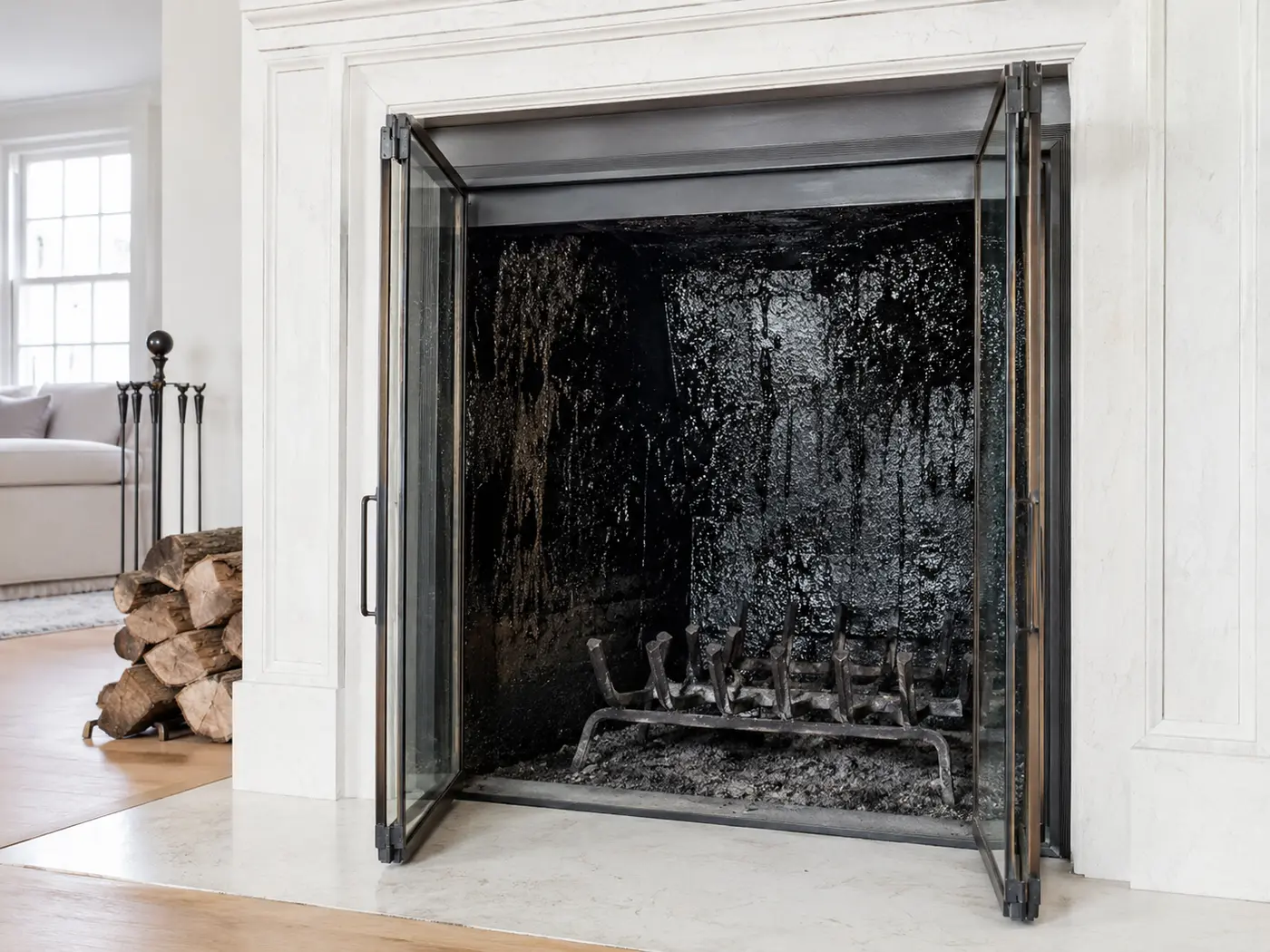
Stage 3 is the most dangerous and most difficult form of creosote. It appears as a thick, glassy, tar-like glaze, sometimes dripping and reforming into hardened black formations inside the flue. Stage 3 creosote is dense, extremely flammable, and cannot be removed with standard cleaning equipment. It must first be treated with a magnesium-based chemical catalyst that converts the glaze back into a brushable Stage 1 or Stage 2 consistency before mechanical removal can begin. A chimney with Stage 3 deposits should not be used until professionally treated. The fire risk is immediate and serious.
How Creosote Causes Chimney Fires
When the temperature inside the flue reaches creosote’s ignition point, as low as 451°F, well within the range of a normal wood fire, the deposits ignite. What follows is not a slow burn. A creosote chimney fire is a rapid, intense combustion event that can reach temperatures exceeding 2,000°F inside the flue. That is nearly three times hotter than a normal wood fire.
What Happens During a Chimney Fire
A chimney fire often announces itself with a loud roaring or rumbling sound coming from the fireplace, a strong acrid smell, visible smoke or flames shooting from the chimney cap, and shaking or rattling of the flue pipe. Some chimney fires, particularly in masonry chimneys, burn slowly enough that homeowners never notice them at all. These slow fires cause just as much structural damage without any of the warning signs.
The Structural Damage a Chimney Fire Causes
At 2,000°F, the damage to chimney components is severe and rapid. Clay tile flue liners crack and shatter. Mortar joints in masonry chimneys are destroyed. In factory-built metal chimneys, seams and joints warp and fail. Most critically, the heat transfers through the chimney structure into the adjacent wooden framing of the house, creating a pathway for fire to spread from the chimney system into the home itself. A chimney that has experienced a fire must be professionally inspected before further use, even if no external damage is visible. Internal damage is often extensive and invisible from the firebox.
If you suspect a chimney fire
Get everyone out of the home and call emergency services first. Even a fire that seems to burn out on its own can leave cracked liners and hidden damage behind. Have the chimney professionally inspected before you ever light another fire.
Warning Signs of Creosote Buildup in Your Chimney
You don’t need a camera inspection to suspect a creosote problem. These are the most common homeowner-visible warning signs:
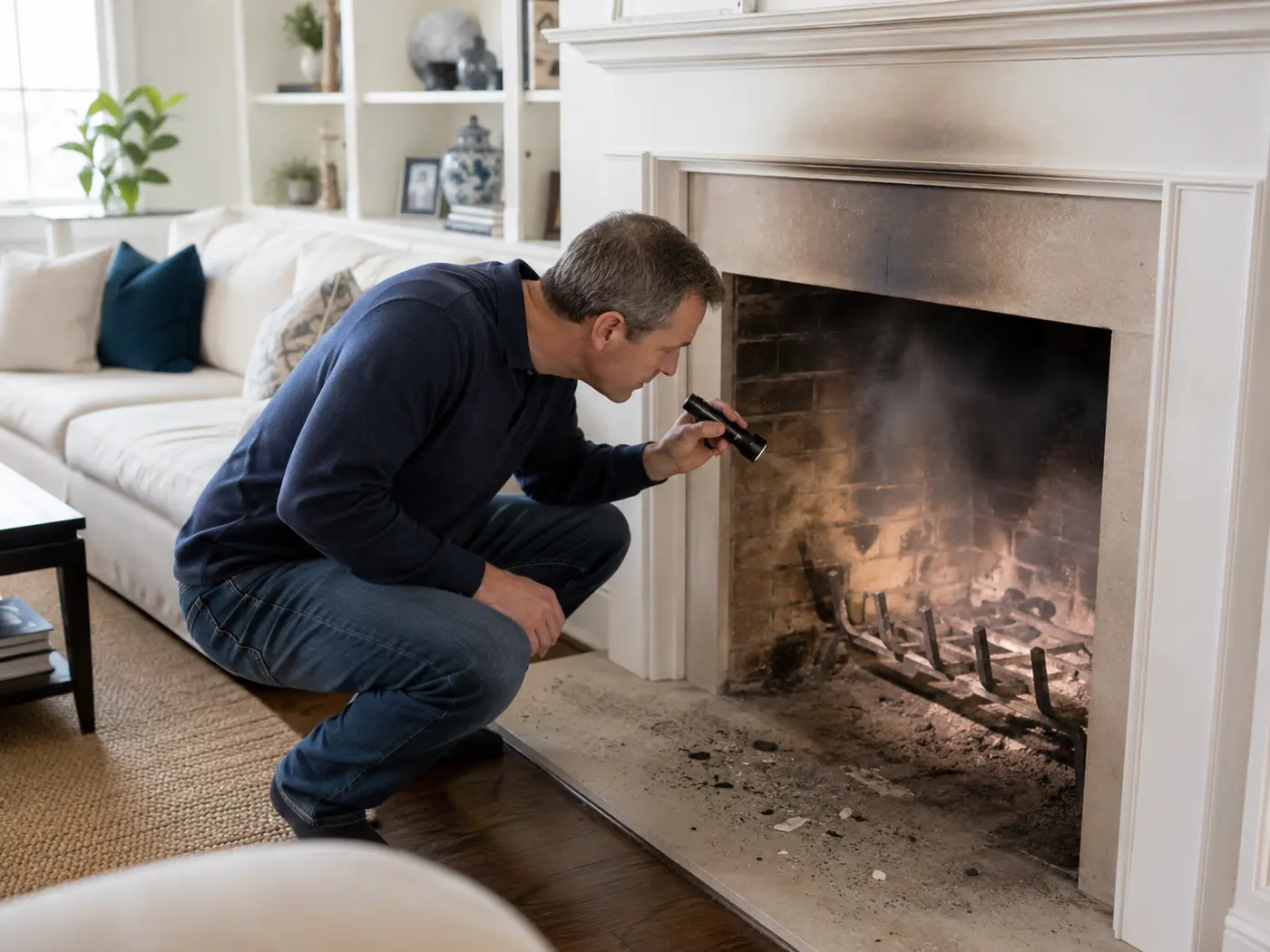
A strong smoky or campfire-like odor coming from the fireplace when it is not in use is one of the most reliable indicators. Creosote absorbs into the liner and masonry and releases its smell when heat or humidity rises. Other signs include visible black, shiny, or tarry deposits around the fireplace opening or on the damper, a noticeable reduction in draft performance or more smoke entering the room during fires, and difficulty fully opening or closing the damper due to heavy buildup restricting movement.
If you notice any of these signs, schedule a professional chimney inspection before lighting another fire.
Not sure how much creosote is in your flue?
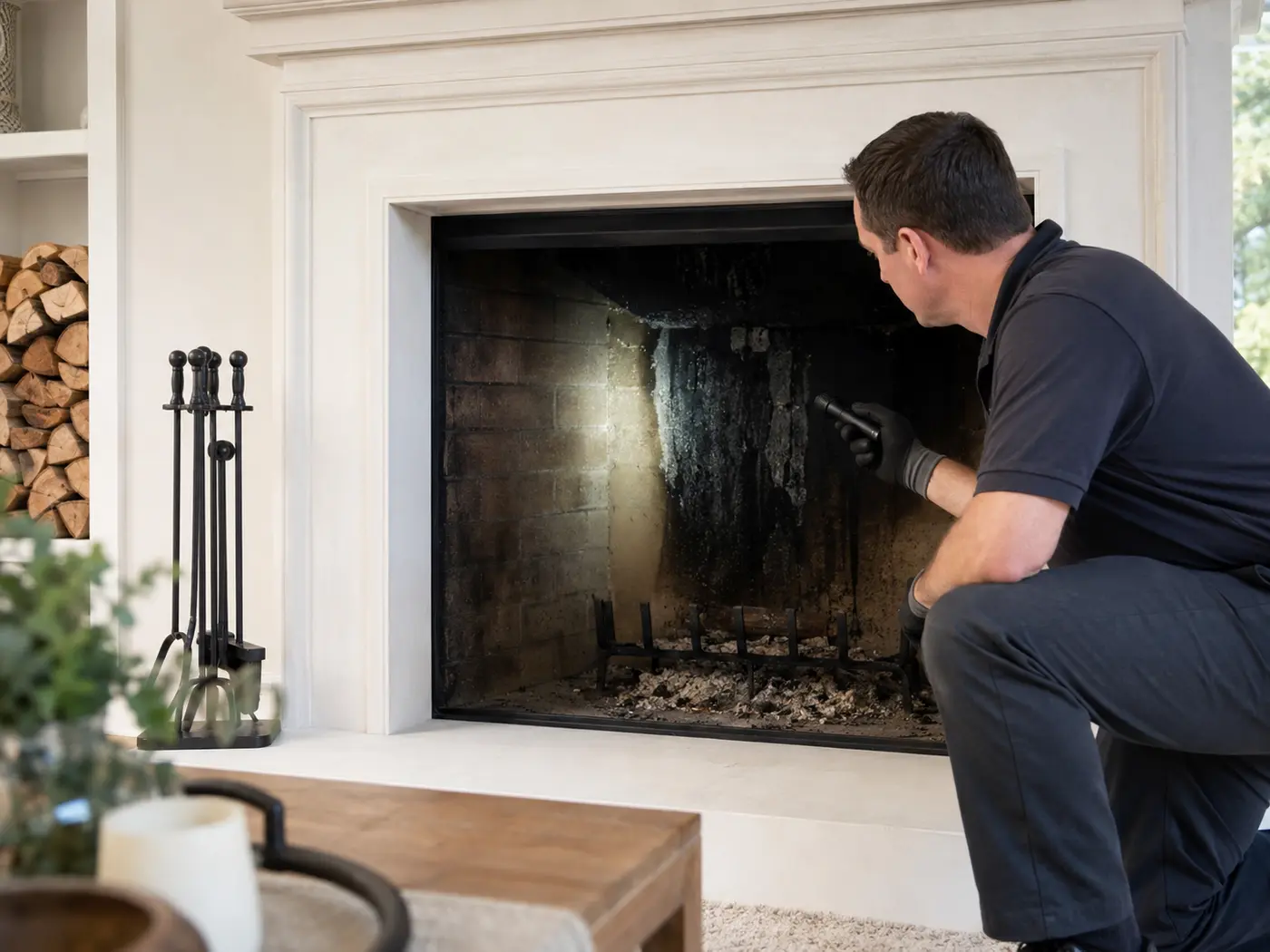
Our CSIA-certified technicians camera-scan the flue, identify the stage of any deposits, and clean with the right equipment for the job. Start with our $49 Special Chimney Inspection.
How to Prevent Creosote Buildup
Preventing creosote is straightforward once you understand the three conditions that create it. Eliminate those conditions and you eliminate the problem.
Burn Only Seasoned Hardwood
Oak, hickory, ash, and maple are ideal firewood choices for Northeast Ohio homeowners. Dense hardwoods burn hotter, produce less smoke, and generate significantly less creosote than softwoods like pine or poplar. Ensure your firewood has dried for at least six months, ideally a full year, and store it elevated and covered to prevent moisture reabsorption. Target a moisture content below 20% before burning.
Maintain Proper Draft and Airflow
Always open the damper fully before lighting a fire and keep it open until the fire is completely out and the firebox is cold. Ensure the firebox air inlets are not obstructed. If your chimney has persistent draft problems such as smoke entering the room, slow-starting fires, or a fireplace that frequently smokes, the underlying cause (flue sizing, chimney height, or chimney liner condition) needs professional diagnosis.
Warm the Flue Before Building a Full Fire
On cold days, a cold flue creates an ideal environment for rapid creosote formation during the first minutes of a fire. Before building a full fire, warm the flue by holding a rolled piece of burning newspaper up into the damper opening for 30 to 60 seconds. This primes the draft, gets flue gases moving upward, and raises flue wall temperatures above the creosote condensation threshold before significant smoke is produced.
Schedule Annual Professional Chimney Cleaning
This is the single most effective prevention measure available. Annual chimney cleaning by a CSIA-certified chimney sweep removes Stage 1 and Stage 2 deposits before they progress, identifies Stage 3 buildup requiring chemical treatment, and catches structural issues that allow cold air infiltration and poor draft. The National Fire Protection Association (NFPA 211) recommends annual inspection and cleaning for all chimneys, fireplaces, and solid fuel venting systems. For wood-burning fireplaces used regularly during Ohio’s long heating season, annual cleaning is not optional, it is the baseline for safe operation.
When to Call a Professional Chimney Sweep
You should schedule a professional chimney cleaning and inspection if any of the following apply:
- Your last cleaning was more than 12 months ago and you have used the fireplace at least once.
- You have noticed any of the warning signs described above: odor, visible deposits, reduced draft, or damper difficulty.
- You have recently purchased a home and don’t know the service history of the chimney.
- You’ve had any prior chimney fire, even a suspected minor one.
- Your chimney does not have a cap, increasing exposure to moisture that accelerates all stages of creosote formation.
A trained technician will perform a camera scan of the flue, identify the stage of any deposits present, clean the chimney using appropriate equipment for the deposit type, and provide a written report with photos so you know exactly what was found and what was done.
A chimney fire starts silently and moves fast. One annual cleaning is all it takes to keep your family and home safe through Ohio’s long heating season.
Frequently Asked Questions
What temperature does creosote ignite at?
Creosote can ignite at temperatures as low as 451°F, which is well within the range of a normal wood fire. Once it ignites, a creosote chimney fire can reach temperatures exceeding 2,000°F inside the flue, nearly three times hotter than a normal fire.
What are the three stages of creosote?
Stage 1 is light, dusty soot that brushes away easily. Stage 2 is a hard, tar-like or shiny flaky coating that requires rotary tools. Stage 3 is a thick, glazed, glassy deposit that is extremely flammable and must be chemically treated before it can be removed. A chimney with Stage 3 creosote should not be used until it is professionally treated.
How can I prevent creosote buildup?
Burn only seasoned hardwood with a moisture content below 20%, keep the damper fully open for strong draft, warm the flue before building a full fire, and schedule annual professional chimney cleaning. The NFPA recommends annual inspection and cleaning for all chimneys and solid fuel venting systems.
What are the warning signs of creosote buildup?
Common homeowner-visible signs include a strong smoky or campfire-like odor from the fireplace when it is not in use, visible black, shiny, or tarry deposits around the firebox opening or damper, reduced draft or smoke entering the room, and a damper that is hard to open or close due to heavy buildup.