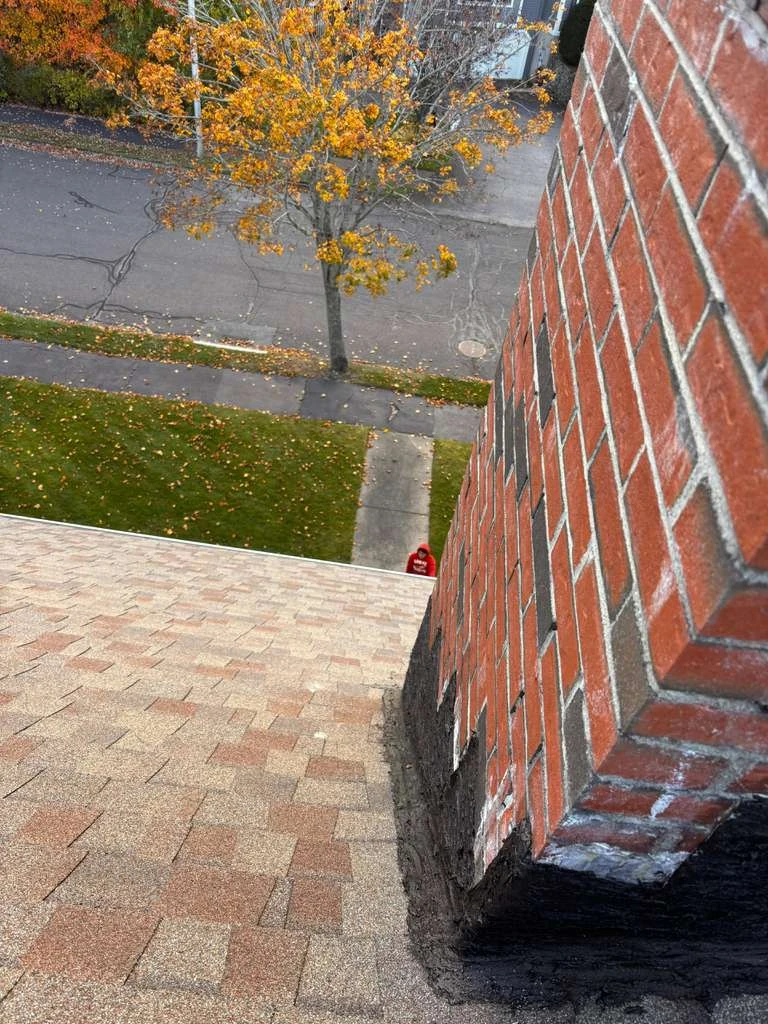
A chimney expert’s walkthrough of where rain gets in, how to find the real entry point, and which repairs actually last in Northeast Ohio.
The short answer
A chimney usually leaks because water enters through failed flashing, a cracked crown, a missing or damaged cap, or deteriorated mortar, not through the bricks themselves. In Northeast Ohio, freeze-thaw cycles open small cracks every winter, so a chimney that was fine last year can start leaking this spring. Water often appears far from where it enters, which is why professional diagnosis finds the real entry point instead of guessing.
The 7 places chimney leaks start
After years of leak calls across Akron, Cuyahoga Falls, Stow, and Hudson, the pattern is consistent. Nearly every chimney leak traces back to one of these seven entry points. They are listed in the order we most often find them.
1. Failed flashing
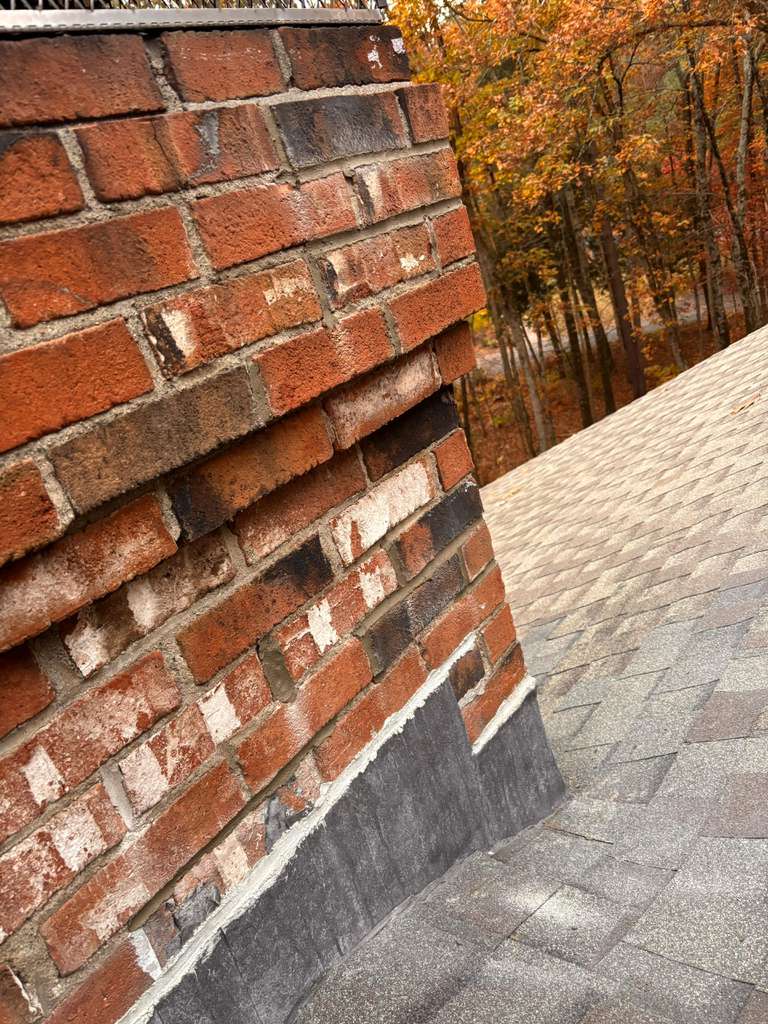
Flashing is the metal where the chimney meets the roof, and it is the single most common leak source. It fails when sealant dries out and cracks, when step or counter flashing pulls away from the masonry, or when it was installed without proper overlap. Because it sits at the roofline, even a small gap funnels a surprising amount of water straight into the house.
2. Cracked or deteriorated crown
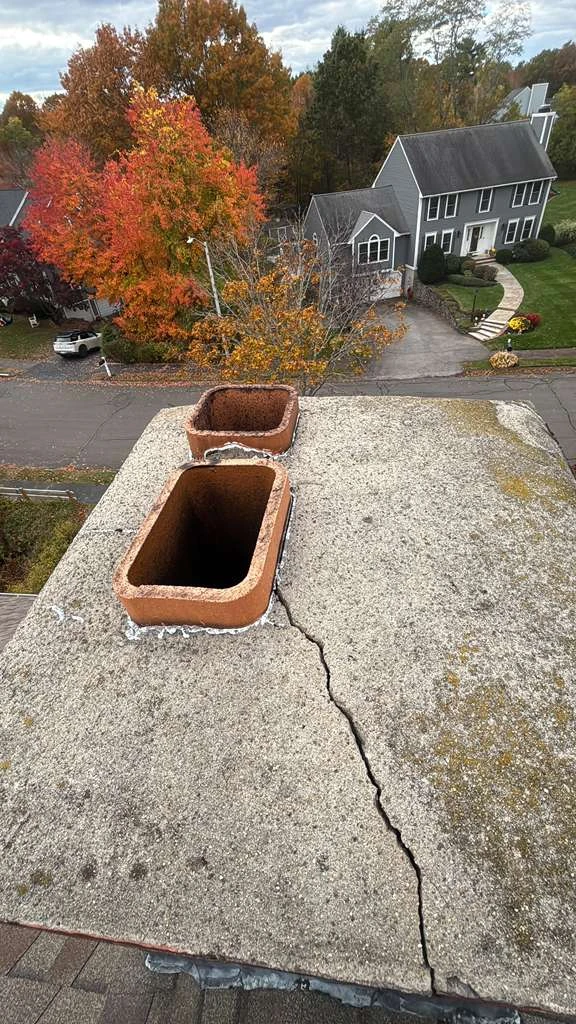
The crown is the concrete slab across the top of the chimney. A proper crown slopes away from the flue and overhangs the brick by an inch or two so water sheds off. When it cracks, which is common after years of Ohio freeze-thaw, water soaks directly into the masonry below and travels down inside the chimney.
3. Missing or damaged chimney cap
An open flue is an open invitation. Without a cap, rain falls straight down the flue, and animals and debris follow. A stainless steel cap with mesh sides keeps water, critters, and leaves out while letting smoke escape.
4. Deteriorated mortar joints
Mortar is porous by nature, and once joints start crumbling, the brickwork acts like a sponge. Repointing, grinding out the bad joints and packing in fresh mortar, restores the weather barrier. But repointing only fixes the joints. If the flashing or crown is the real problem, new mortar will not stop the leak.
5. Spalling brick
Spalling is what happens when waterlogged brick freezes and the face pops off. You will see flaking, pitting, or brick faces lying in the yard. Spalled brick absorbs even more water, so the damage accelerates. In our climate this is one of the fastest ways a small leak becomes a rebuild.
6. Condensation, not rain
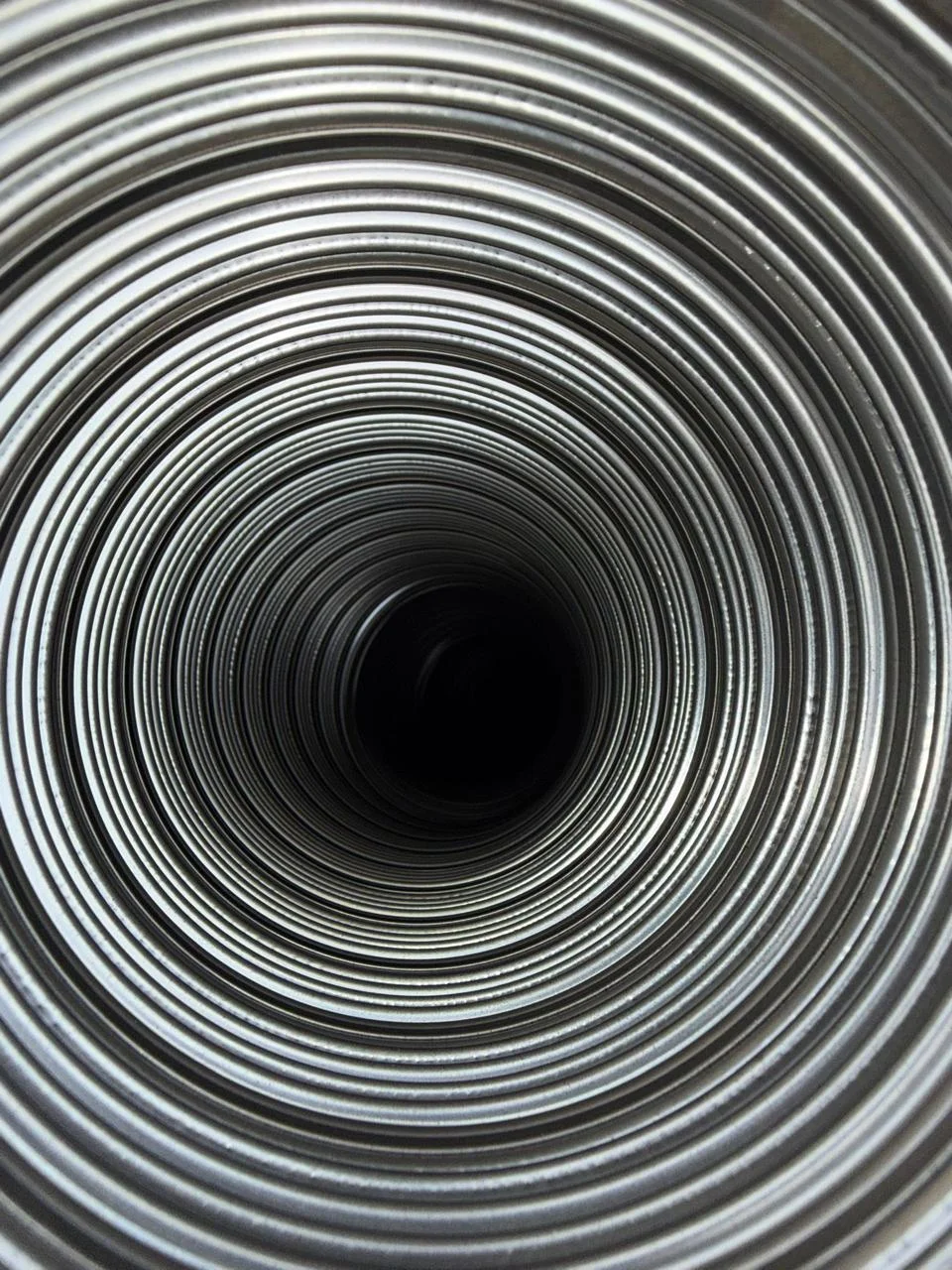
Sometimes what looks like a rain leak is condensation forming inside an oversized or unlined flue, especially with gas appliances. The clues: moisture appears even in dry weather, often with a musty smell or white staining. Condensation needs a different fix, usually proper flue sizing or a liner, not exterior waterproofing.
7. The chimney shoulder
Where a chimney narrows, the sloped ledge is called the shoulder or wash. If it was built flat, or if it has cracked with age, water pools there instead of shedding off and works its way in. A proper rebuild shapes it with a slope so water runs away from the masonry.
How to tell where the water is really coming from
Water is a traveler. It enters at one point and shows up somewhere else entirely, which is why the stain on your ceiling rarely sits directly below the actual leak. Here is how to narrow it down:
- Check during or right after rain. Go into the attic and look at the chimney from the inside. Fresh wetness, darkened wood, or active dripping tells you the general area.
- Read the stains. Brown rings on ceilings or walls near the fireplace usually point to flashing or masonry above. Rust-colored streaks on the firebox often mean water is coming down the flue, which points to the cap or crown.
- Look at the roofline. From the ground with binoculars, or safely from a ladder, check whether flashing looks lifted, rusted, or separated from the brick.
- Do not trust a single clue. Professionals run a controlled water test, wetting one suspect area at a time from the bottom up, so each section can be ruled in or out without guesswork.
The Akron factor: our winters do the damage and spring reveals it. Water trapped in tiny cracks freezes, expands, and widens the opening a fraction of a millimeter at a time. A chimney that survived last winter can start leaking the following April. That is why we recommend a roof-level look every spring, not just when stains appear.
Waterproofing vs. repair: know the difference
These two get confused constantly, and the confusion costs homeowners money.
| Waterproofing | Repair |
| A vapor-permeable sealer applied to sound masonry. It stops water absorption while letting trapped moisture escape. | Fixing what is actually broken: rebuilding flashing, replacing a crown, installing a cap, repointing joints, replacing spalled brick. |
| Preventive. It protects good masonry from future absorption. | Corrective. It eliminates the entry point that already exists. |
| Will not stop a leak coming through failed flashing or a cracked crown. | Must come first. Waterproofing goes on after repairs, never instead of them. |
If a contractor proposes waterproofing as the entire fix for an active leak, get a second opinion. Sealers have their place, but they are the final coat, not the repair.
Repair options and what affects cost
Every leak is different, but the price of a proper fix comes down to a few variables:
- Which entry point. Resealing flashing costs far less than rebuilding a crown or replacing spalled brickwork.
- How long it has leaked. A one-season leak might need flashing work. A five-year leak often needs masonry rebuilding plus interior repair.
- Height and access. A single-story ranch chimney is straightforward. A three-story chimney with a steep roof takes more time and safety setup.
- Masonry condition. Sound brick with bad flashing is a focused repair. Widespread spalling means a larger rebuild.
What lasts: step and counter flashing properly woven into the roofing, a crown with slope and overhang, a quality stainless cap, and sound repointed joints, finished with a vapor-permeable water repellent. Done in that order, the repair outlasts the problem.
What happens if you ignore a chimney leak
A small leak never stays small in this climate. Here is the progression we see when repairs wait:
- Stained ceilings and peeling paint near the fireplace
- Rotted framing and sheathing around the chimney chase
- Mold growth in the attic and wall cavities
- Deteriorated flue liner, which becomes a safety issue
- Structural masonry damage that turns a repair into a partial rebuild
Each stage costs more than the one before it. The cheapest chimney leak to fix is the one you address the first season you notice it.
Chimney leak FAQs
Why does my chimney only leak during heavy rain?
Light rain often is not enough to push water past a small gap. Heavy, wind-driven rain forces water under lifted flashing, through hairline crown cracks, and into porous mortar that lighter rain never reaches. If leaks only appear in downpours, the entry point is usually small but real, and it gets worse with every freeze-thaw cycle.
Is a little water in the fireplace normal?
No. A properly built chimney keeps rain out entirely. Even small amounts of water signal an entry point, and in Northeast Ohio that water freezes inside the masonry in winter, widening cracks a little more each year.
Will repointing stop my chimney leak?
Repointing fixes deteriorated mortar joints, and it helps when the joints are the entry point. But if the leak comes from failed flashing, a cracked crown, or a missing cap, repointing alone will not stop it. That is why diagnosis comes before repair.
Can I fix a chimney leak myself?
Sealant from a tube is a temporary patch, not a repair, and roof work is dangerous. Proper flashing work, crown rebuilding, and masonry repair require getting the details right the first time. A professional diagnosis costs far less than fixing a failed DIY repair plus the water damage it allowed.
What kind of damage can a chimney leak cause inside my home?
Stained ceilings and walls near the fireplace, peeling paint, musty odors, damaged drywall, rotted framing around the chimney chase, and mold growth. Over time, water also deteriorates the flue liner, which is a safety issue, not just a cosmetic one.
Why is there water pooling under my basement fireplace?
Water that enters higher up travels down inside the chimney structure and can emerge at the lowest point, including the basement. The entry point is rarely at the basement level. The leak usually starts at the flashing, crown, or upper masonry, and the water follows the path of least resistance downward.
My chimney started leaking after a new liner was installed. Why?
A new liner changes how the system breathes. If the crown was not properly sealed around the new liner, or if the old cap no longer fits the new setup, rain now has a direct path in. The liner itself rarely causes the leak. The disturbed crown-to-liner joint is the usual suspect.
How do I find the exact spot where water gets in?
Start in the attic during or right after rain and trace staining upward. Check the roof-to-chimney joint, the crown, and the cap. Professionals use controlled water testing, working from the lowest suspect area upward, to isolate the entry point without guessing.
About this guide
This guide was written by the chimney professionals at OakTree Chimney Solutions, serving Akron and Northeast Ohio. It reflects what we actually find on roofs and in attics across the area, not generic advice. If your chimney is leaking, a proper diagnosis is the first step, and it is the step most often skipped.
Noticed water where it should not be? Call (330) 771-9394 for a chimney leak diagnosis and a straightforward repair plan. We will find the real entry point and fix it once, properly.